Side-by-side check
Every drafted record can be read against the scanned page it came from.
Nothing reaches a catalogue, an export or the public without a named person accepting it.
EU-resident AI processing · Human review on every field
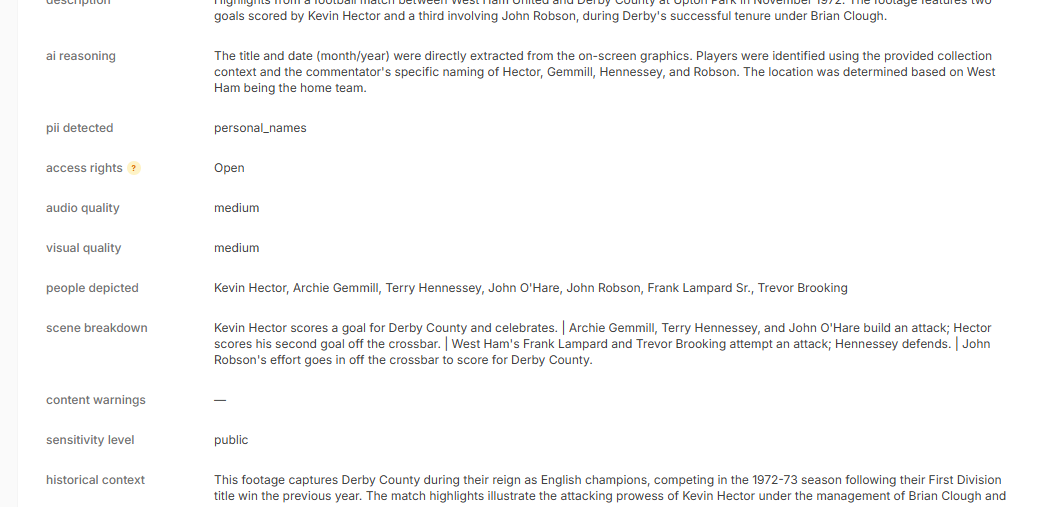
Each drafted field carries a written citation: what the AI saw on the page, or a plain statement that it inferred the value with no direct evidence.
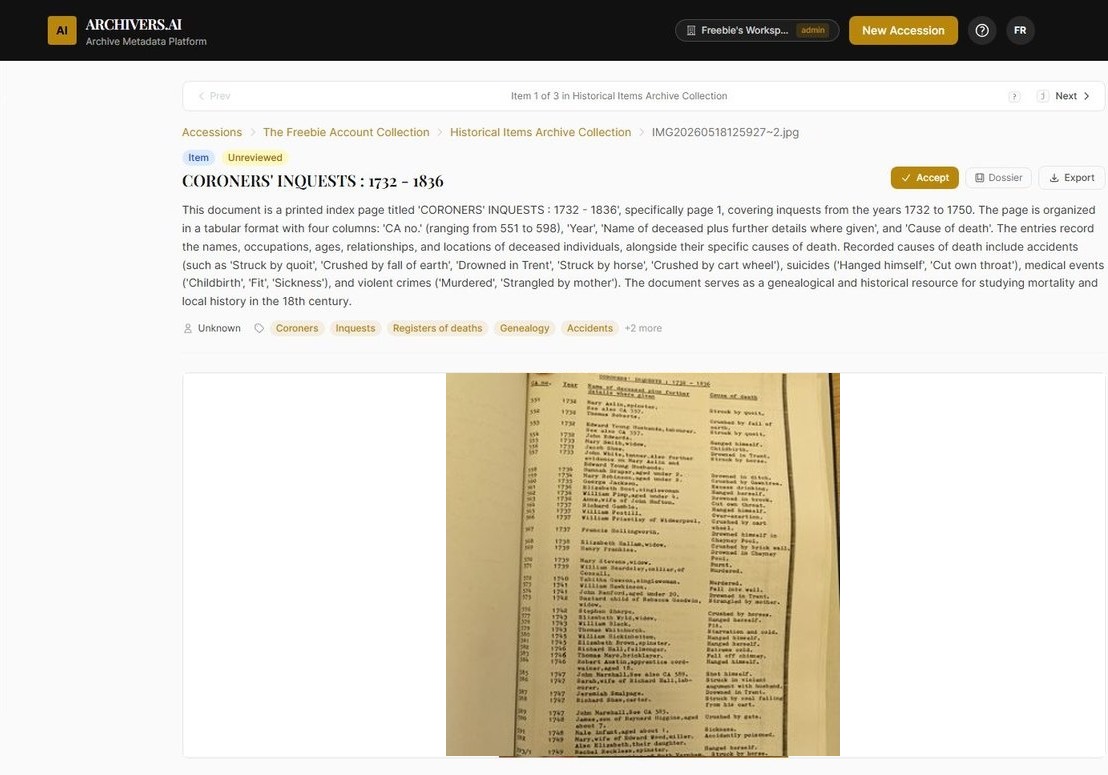
Converting a legacy catalogue raises a harder question than accuracy: was anything on the page missed?
Built for how volunteer-heavy services actually staff this work.
Every drafted record can be read against the scanned page it came from.
A reviewer confirms nothing on a page was missed, not only that fields look right.
A volunteer checks against the source; an archivist gives the final sign-off.
Each record keeps a link back to its exact source page, for good.
The record of the decision travels with the record itself, into whatever holds it next.
Each AI action and each human review is written as a preservation event with a timestamp, an agent and an outcome.
Finding aids record that AI-assisted cataloguing was used, when it ran, and which software agent produced the draft.
Processing events, edits, overrides and approvals are logged, attributed and exportable — so you can show who did what, and when.
EU data centres for AI processing
No-training commitments from our AI vendors
Your notes shape the draft, not the reverse
Trust page sub-processors and exit
Start free with 30 credits a month, or talk to us about an institutional pilot.