For universities and special collections

Special collections, described to the depth research needs.

Manuscripts, institutional records, lecture recordings and teaching collections become reviewable records that feed ArchivesSpace, AtoM or Preservica.

30 free credits a month · No card needed

Where it fits

In front of your repository, not instead of it.

Archivers.ai does the description work that has to happen before anything can be ingested.
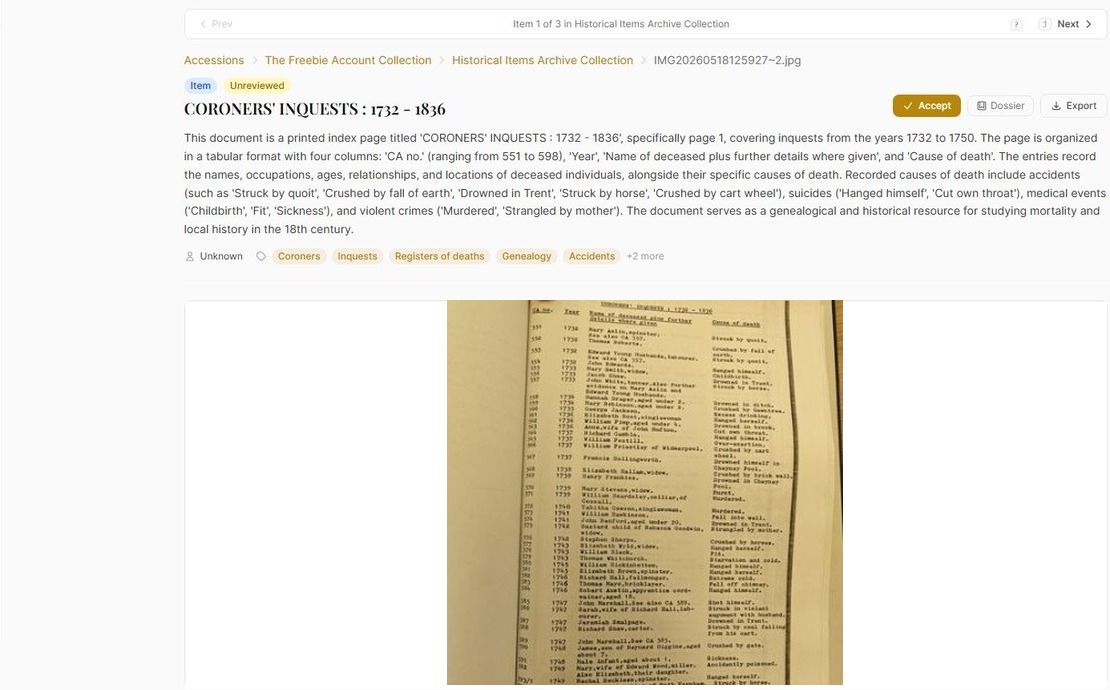
An Archivers.ai item record for a printed index page of Coroners’ Inquests 1732 to 1836, marked Item and Unreviewed, with a drafted description, subject tags, the photographed source page and an Accept button
Manuscripts and rare books

Handwriting becomes a record.

Text recognition, date extraction and named entities across digitised manuscripts, with an archivist accepting each record.

  • Printed and handwritten source material
  • Dates, names and places pulled out
  • Reviewed before it reaches the catalogue
How we use AI
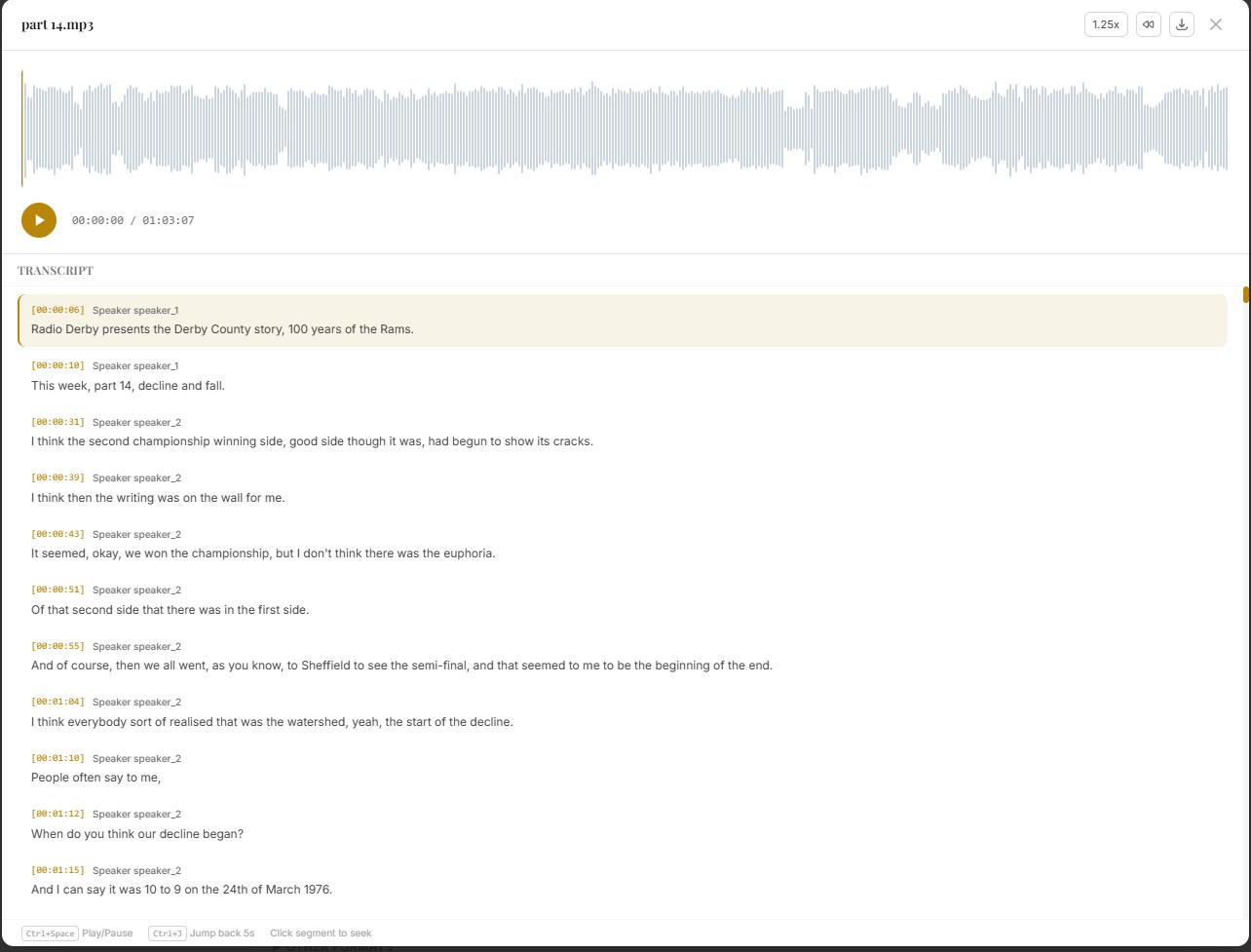
An Archivers.ai audio player showing the waveform of an hour-long recording beside a timestamped transcript, with each line labelled by speaker and clickable to seek the audio
Audio and video

Lecture recordings you can quote.

Oral histories, seminars and departmental recordings are transcribed on paid plans with timestamps and speakers, then checked against the audio.

  • Timestamped, speaker-separated transcripts
  • Playback beside the text for verification
  • Searchable alongside the paper records
What the platform does
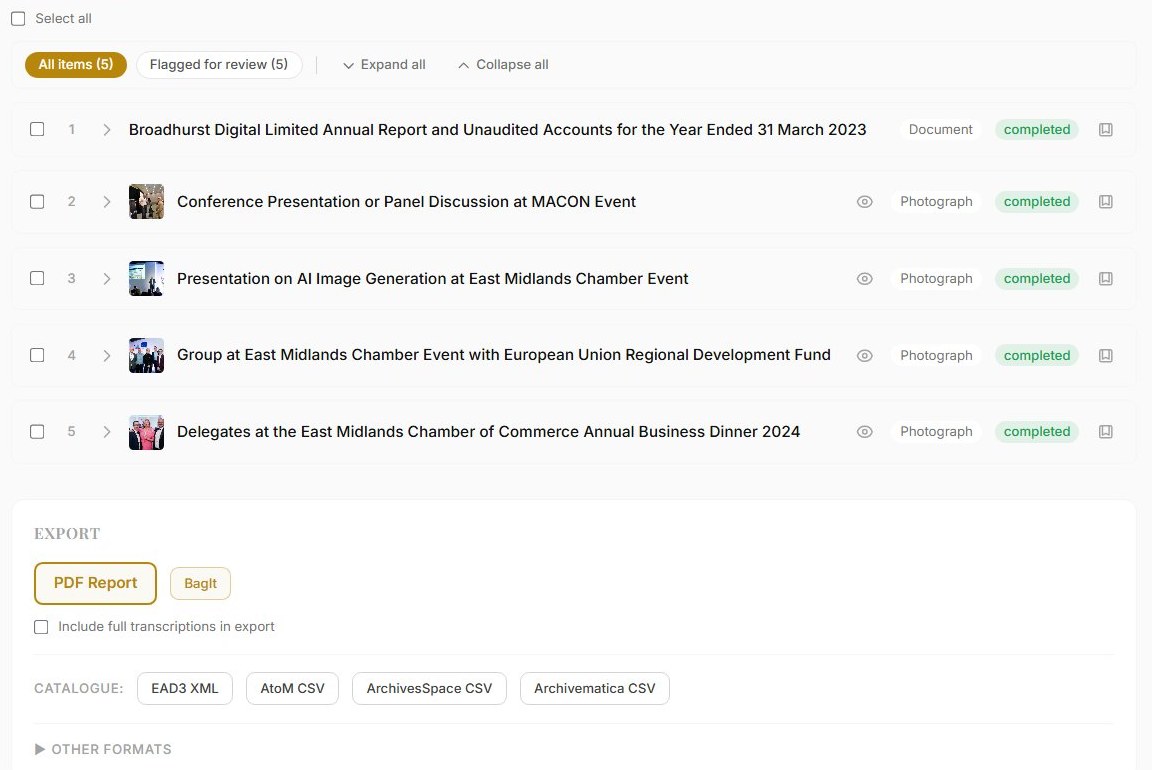
A completed Archivers.ai accession listing five reviewed items above an export panel offering a PDF report, BagIt, and catalogue exports for EAD3 XML, AtoM CSV, ArchivesSpace CSV and Archivematica CSV
Handover

Into the system of record.

Export profiles are agreed in writing and tested against a staging instance before the full run begins.

  • ArchivesSpace, AtoM, Preservica, Archivematica
  • EAD3, Dublin Core, BagIt with PREMIS
  • Institution-specific schemas mapped at onboarding
How onboarding works
What stands behind it

Four things we state plainly.

Not a repository — it feeds yours

Archivist review on every field

EU-resident AI processing

Open formats only, no lock-in

Common questions

What special collections ask first.

Does this replace ArchivesSpace or Preservica?

No. Archivers.ai is a processing and access layer. Your repository stays the system of record, and reviewed records are exported into it.

How are authorities handled?

Names and organisations can be linked to VIAF, FAST or Wikidata, or promoted to a local authority record. Terms are linked to a source rather than invented.

Can research students and volunteers help?

Yes. Volunteer and reviewer seats are free on every paid plan, and final acceptance can be restricted to archivist-level access.

Can we buy on a purchase order?

Invoice and purchase order are available on Institution plans and the larger credit packs. Annual plan costs are published in full.

How do funded projects work?

Larger and funded projects run through institutional onboarding: scoping, a documented standards mapping, a sample refinement pilot, then the full run.

Plan a special collections project.

Start free on a sample, or tell us the shape of the project and we will scope it with you.