Directors & Heads of Collections
Archivers.ai turns your cataloguing backlog from a liability into a strategic asset. Faster backlog reduction with standards-aligned outputs for funded digitisation projects — and a retention route through staff Explore and public discovery once the processing work is done.
faster to draft metadata than manual description, typically
export from day one
items free to validate the approach
Two phases of value
Most collections teams first adopt Archivers.ai to clear a backlog. The longer-term value comes afterwards: searchable collections, standards-based portability, stronger funding logic, and public-facing access that helps the value of digitisation outlive the project itself.
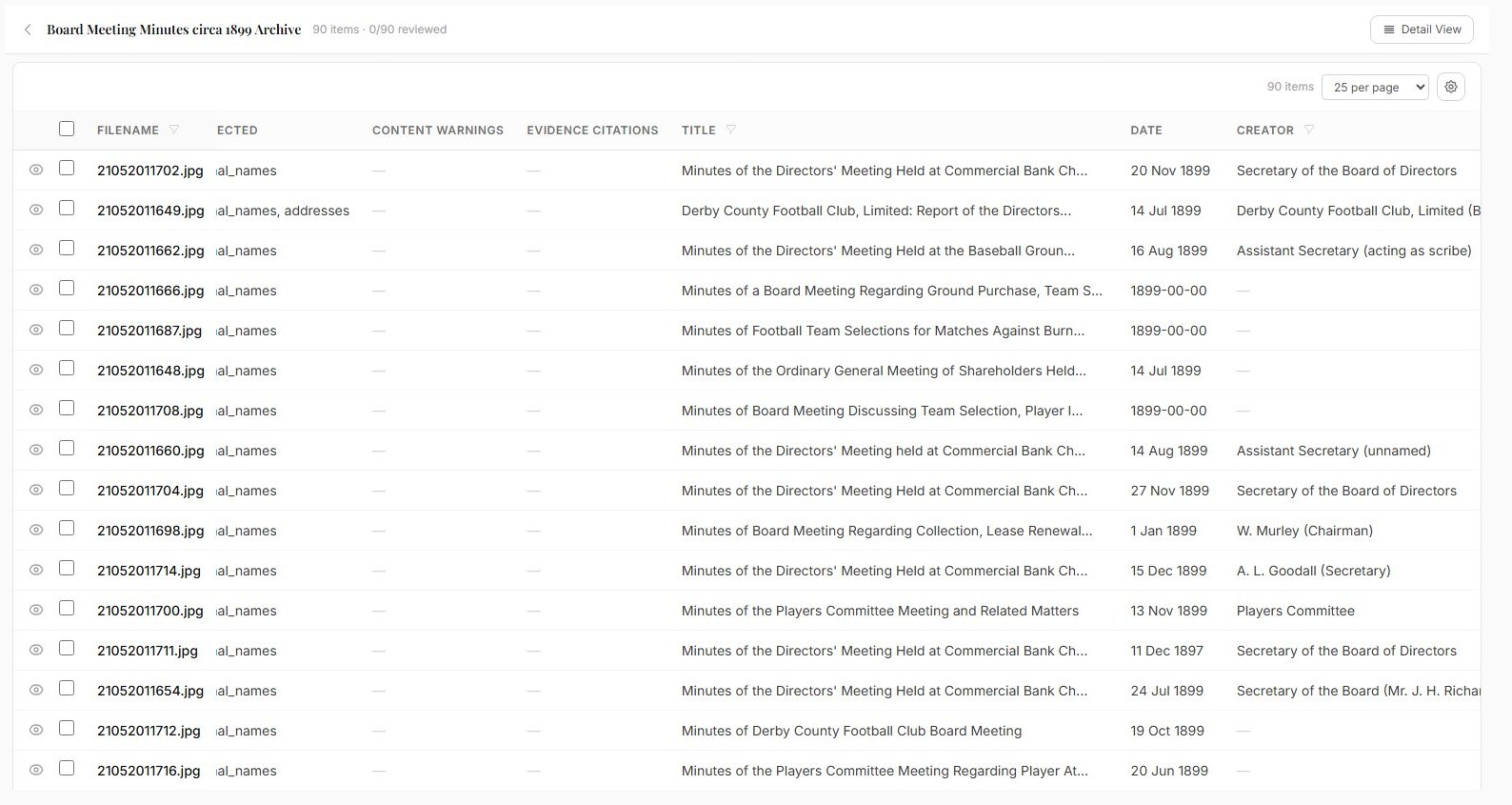
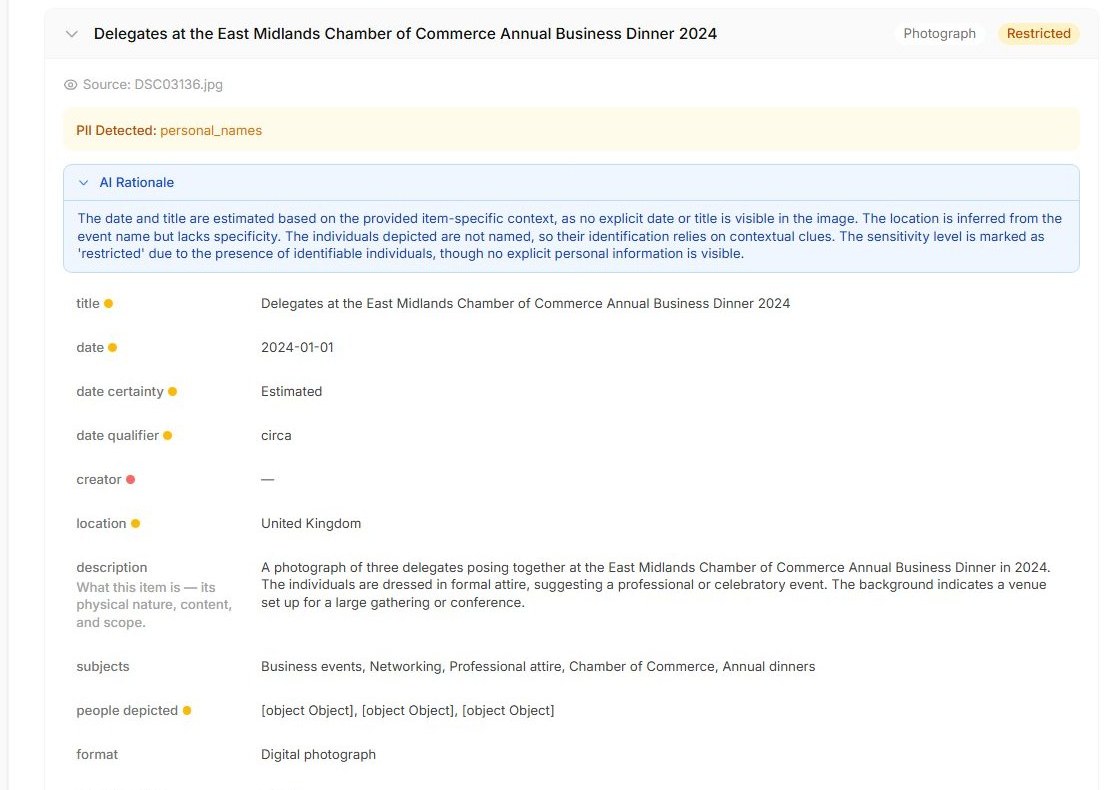
Phase 1 — Funded backlog reduction. Use Archivers.ai as part of a funded digitisation or cataloguing project to turn digitised material into reviewable, standards-aligned records. Your team is still in control: every record is reviewed before it leaves the platform.
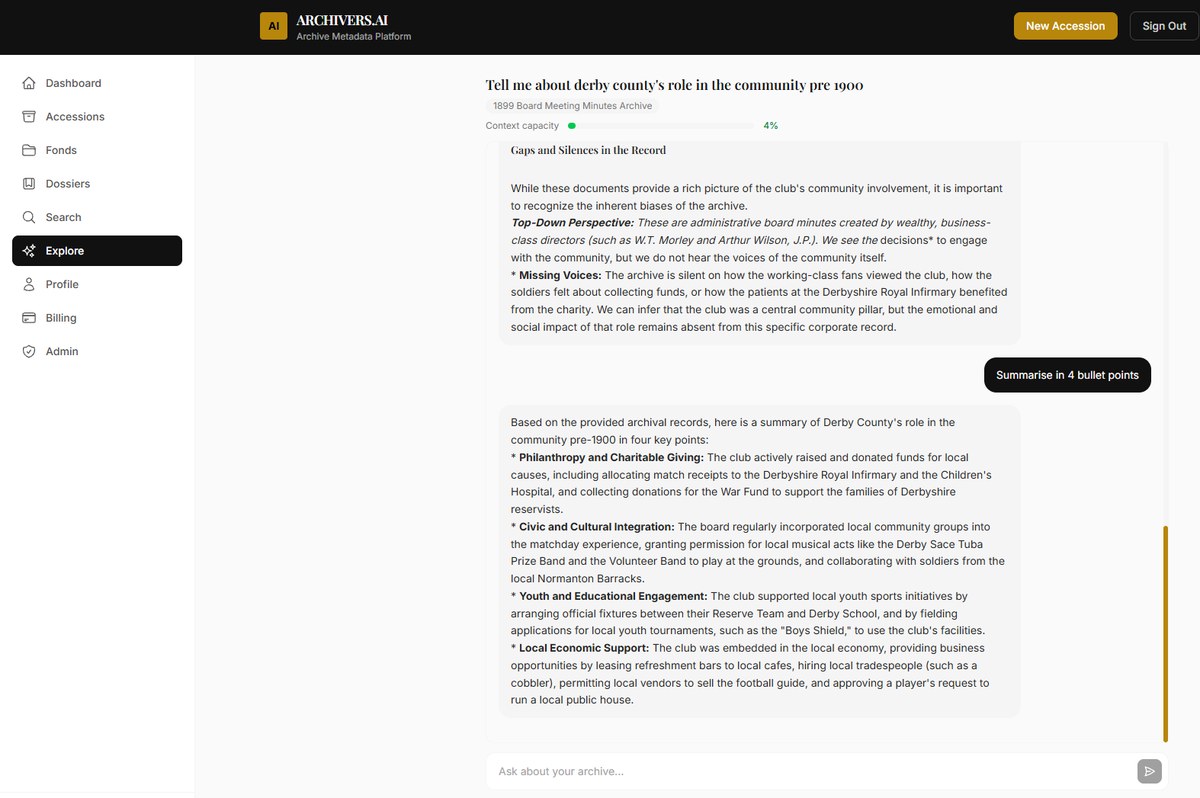
Phase 2 — Searchable public value. After processing, Archivers.ai becomes the staff Explore and public discovery layer. Researchers and the public find material; your team can report engagement to funders; the work done today continues to earn its keep.
Measurable Progress
Every accession processed through Archivers.ai produces a clear record: items catalogued, metadata generated, exports delivered. Your team can demonstrate progress to the board with concrete numbers, not estimates.
The analysis view summarises themes, arrangement suggestions, and gaps across each accession — giving you oversight without micromanagement.
ROI estimator
A back-of-envelope estimate. Change the numbers to match your situation — results update automatically. Calculated client-side; nothing is sent anywhere.
Indicative only. Assumes 220 working days per year. Archivers.ai processing speeds up the drafting step; archivists still review every record before it leaves the platform. Actual savings depend on collection complexity, review policy, and standards mapping — we model this properly during scoping.
The Business Case
A cataloguing backlog isn’t just an operational inconvenience. It’s a financial risk and a risk to the return on your digitisation investment. AI-assisted processing reduces the time to produce draft records — but professional review remains essential for every item that enters your catalogue.
A skilled archivist can catalogue around 10–20 items per day when working carefully to a recognised standard. For a collection backlog of 5,000 items, that represents a minimum of 250 working days — more than a full year of staff time, before any other duties.
At a salary cost of £35,000–£45,000 per year for a qualified archivist, clearing a backlog of that size represents £35k–£45k in staff costs alone. For larger backlogs, multiply accordingly.
Archivers.ai generates draft descriptions for the same volume in days rather than months — with AI handling the initial metadata and your team reviewing and approving every record. The staff time saved goes back into your service, your public programmes, and your next funding application.
Funder Expectations
The National Lottery Heritage Fund and other funders increasingly expect standards-based outputs as evidence of proper stewardship of publicly funded collections: EAD-compliant finding aids, PREMIS provenance, accessible metadata, and evidence of public benefit.
Archivers.ai produces EAD3 and BagIt with PREMIS outputs as standard — helping teams produce standards-aligned outputs for funded digitisation projects and reporting conversations. Formal acceptance by any specific programme depends on that programme’s own requirements.
Designed to support NLHF-style digitisation workflows
Archivers.ai produces EAD3 and BagIt with PREMIS exports for every reviewed record — the evidence and structure funders expect. No additional software, no consultant fees.
Board-Level Benefits
From the Blog