SPECTRUM-aligned draft metadata for museum collections

From undescribed acquisitions to reviewable catalogue records. Archivers.ai generates SPECTRUM-aligned draft metadata for objects, photographs, and documents — with human review at every step. We are not a full collections management system — we complement your existing CMS (Axiell, Modes, Adlib, Mimsy) rather than replacing it.

Archivers.ai complements your existing collections management system — it doesn’t replace it. Export profiles for Axiell, Modes, Adlib, Mimsy, and other museum CMS platforms.

What museums tell us

Accreditation-relevant documentation

Museum accreditation processes expect documented cataloguing procedures and evidence of standards-aligned records. Archivers.ai supports consistent cataloguing workflows and evidence gathering relevant to museum accreditation processes — the formal decision still rests with the awarding body.

🏛

Object-based cataloguing complexity

Museum objects require specific fields: maker, materials, dimensions, technique, provenance, acquisition method. Standard archiving tools don't cover these.

📦

Backlog of undescribed acquisitions

Donations, bequests, and transfers arrive continuously. Without a scalable cataloguing tool, the backlog grows faster than it can be cleared.

Built for museum collections

  • SPECTRUM-aligned metadata fields. Title, description, maker, materials, technique, date of creation, provenance, acquisition date, and more.
  • Object descriptions with full context. AI generates structured descriptions covering materials, likely maker, estimated date, and condition notes.
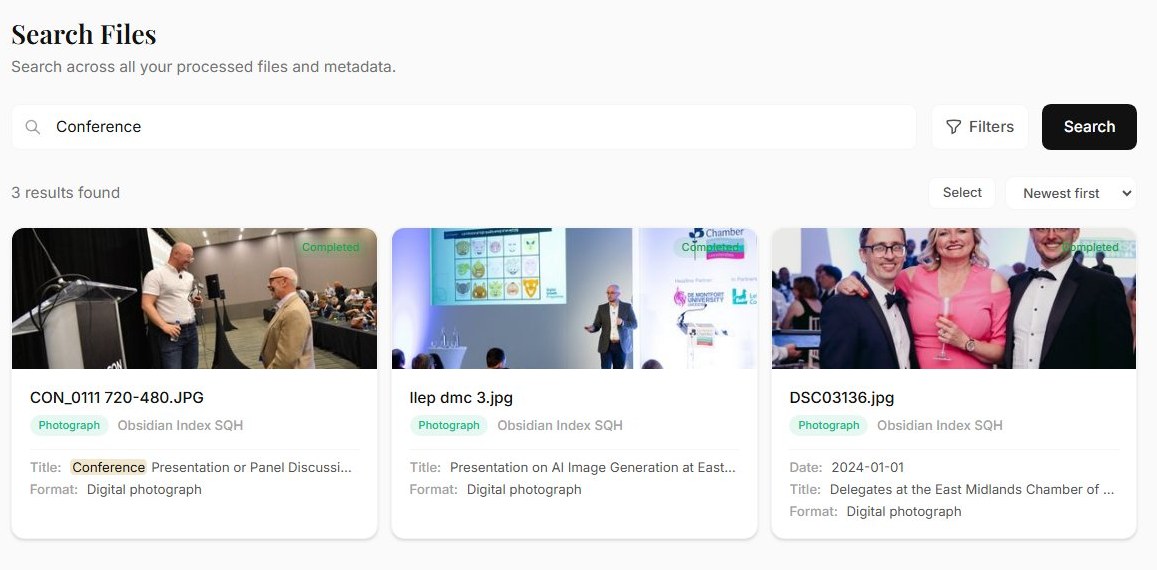
  • Bulk backlog processing. Upload hundreds of items at once. The AI works through your backlog while you review and approve.
  • Export in standard formats. CSV, EAD3, and Dublin Core — formatted for import into collections management systems including Axiell, Modes, and Adlib.
  • Photograph and document handling. Objects, photographs, correspondence, and printed materials — all processed in the same workflow.
  • Provenance tracking. Record acquisition source, method, and date alongside object metadata.

From photograph to full catalogue record

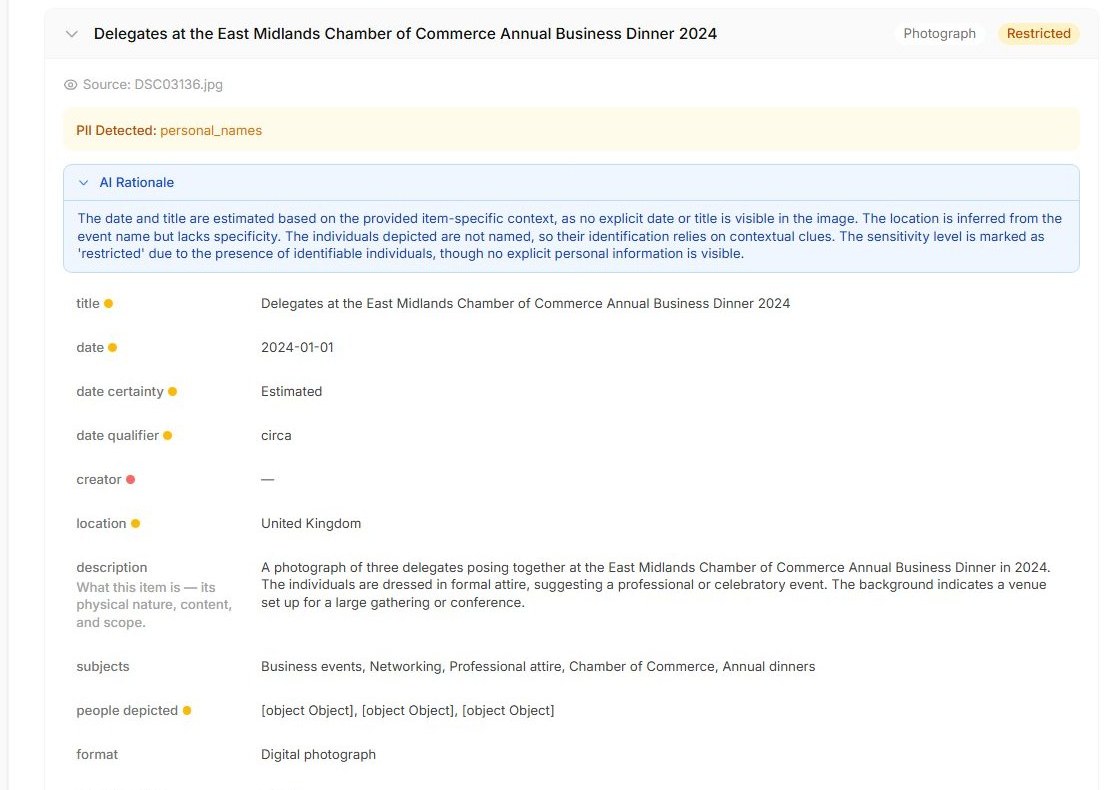
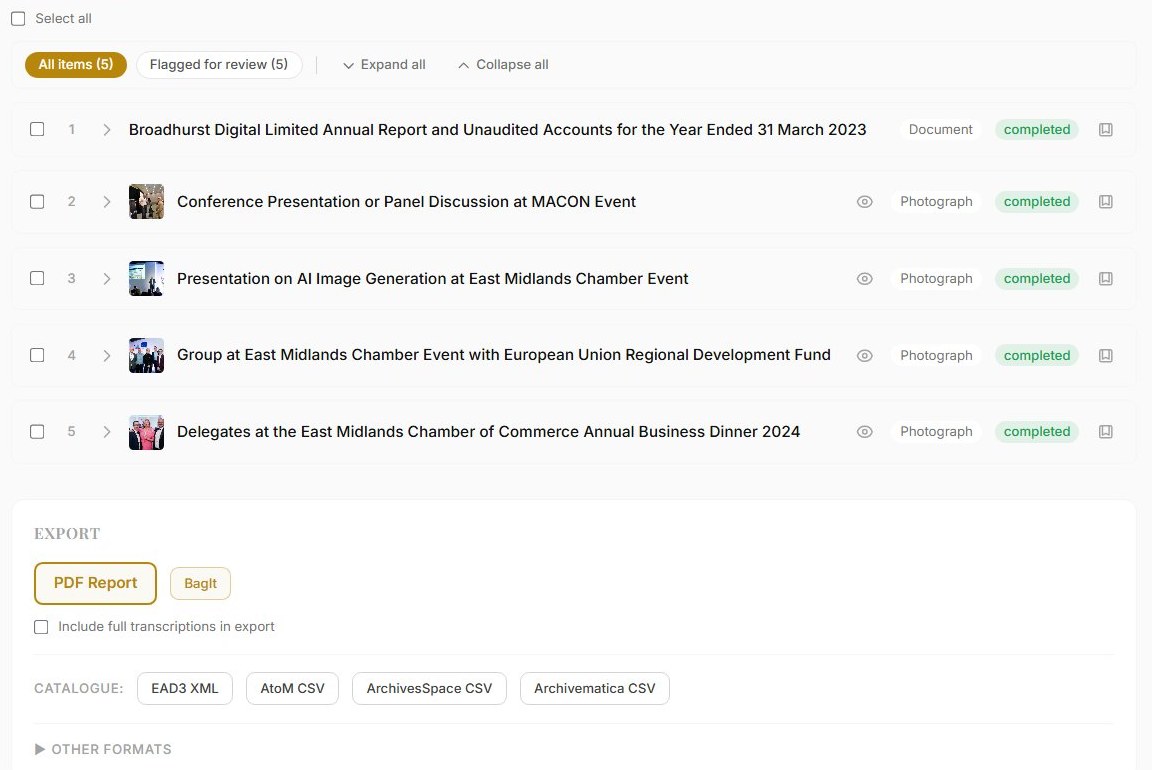
Upload an object photograph or document scan. The Archiver's AI generates structured metadata — title, description, materials, estimated date, maker attribution, and condition notes. You review each field, adjust where needed, and approve.

The result is a structured draft catalogue record ready for your review — dramatically faster than starting from a blank form.

AI-generated metadata for a museum object showing structured fields including title, date, description, subjects and AI rationale

Designed for collections professionals

📄

18+ metadata fields

Structured fields covering all standard museum cataloguing requirements, generated automatically from the object or image.

Human review workflow

AI suggests; you approve. Every record is reviewed before it's published. Perfect for maintaining institutional standards.

📄

Standards-aligned export

EAD3, Dublin Core, and CSV. Import directly into Axiell, Argus, Mimsy, Adlib, or any CMS that accepts standard formats.

View all features →

FAQ

Is Archivers.ai SPECTRUM-aligned?

Archivers.ai generates draft metadata aligned to SPECTRUM procedures, covering the key fields for object entry, cataloguing, and location tracking. It is not a full collections management system — it is a processing and review layer that produces standards-aligned records you can export into your CMS.

Can I import records into our existing collections management system?

Yes. Archivers.ai exports in CSV, EAD3, Dublin Core, and SPECTRUM-aligned records. These are standard formats used by most museum CMS platforms. CSV is the most universal — you can map columns to your system’s fields during import, and we can configure export profiles for Axiell, Modes, Adlib, and Mimsy as part of institutional onboarding.

Does it handle 3D objects or only flat documents?

Archivers.ai processes photographs of objects, not 3D scans. Upload a photograph of any museum object and the AI will generate descriptive draft metadata including materials, technique, estimated date, and condition notes. Works equally well for ceramics, textiles, paintings, or archival documents — all reviewed by a curator before publication.

What about museum accreditation?

Museum accreditation processes expect documented cataloguing procedures and evidence of standards-aligned records. Archivers.ai supports consistent, repeatable cataloguing workflows and evidence gathering relevant to those processes — it does not replace the formal decision made by the awarding body, but it helps you produce the evidence they ask for.

Guides for museum professionals

Updates from The Archiver