Browse and search
A hub landing page, browse by fonds and accession, and full public search.
Once the backlog is catalogued, staff get a research surface and the public get a way in.
Included on paid plans · No separate portal build
Enquiries, exhibition research and appraisal all run on the same reviewed records.
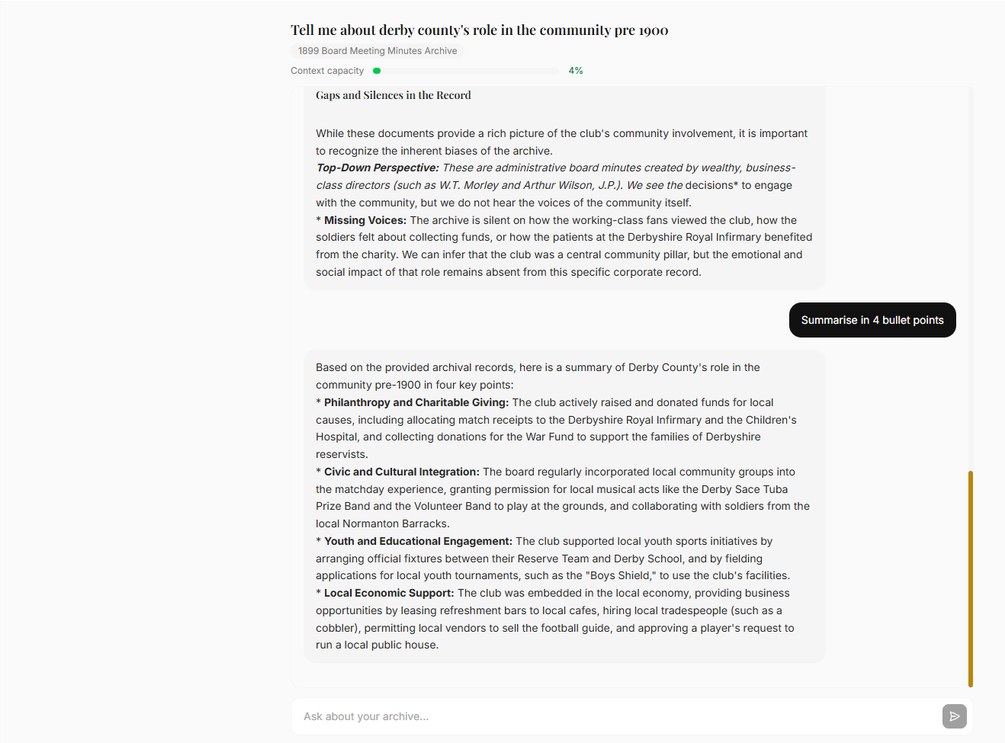
On paid plans, Explore reads transcripts, metadata and descriptions across the processed collection, then cites the items behind its answer.
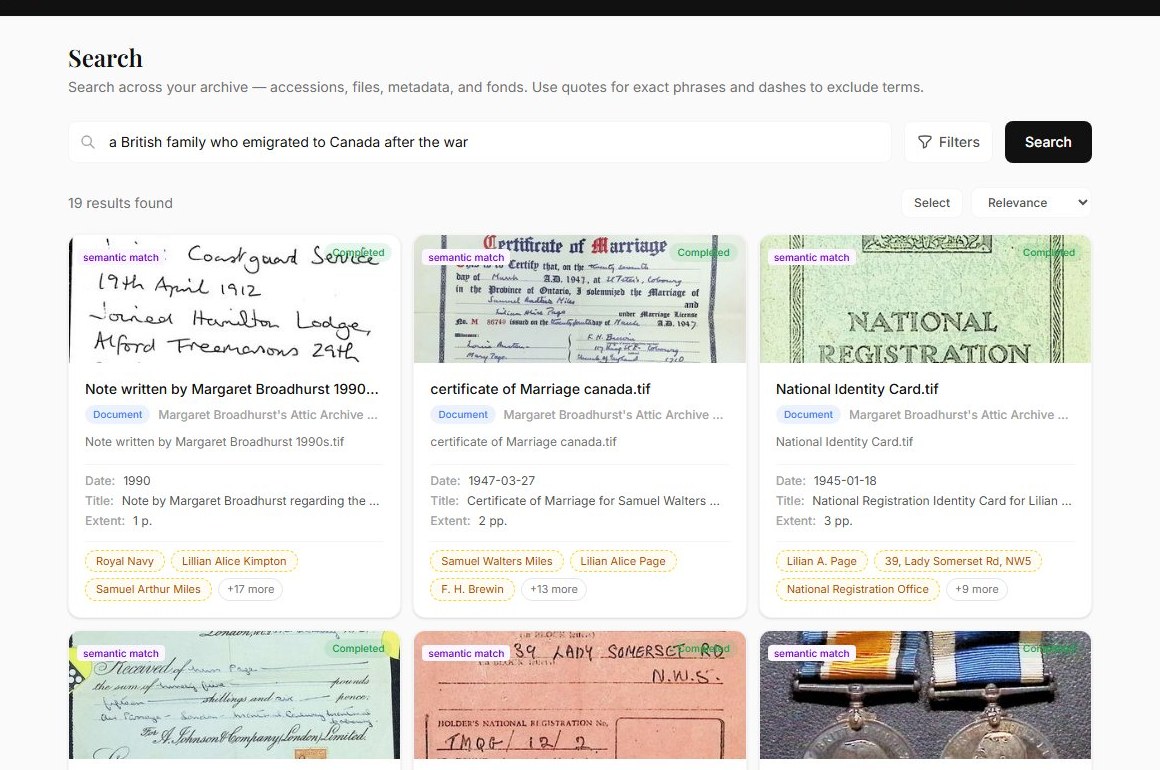
Search runs across records, descriptions and transcripts — the same reviewed material the public portal publishes.
Themed to your service, published on your schedule, running on records a person has accepted — and built to the OAI-PMH and IIIF standards that aggregators and image viewers already consume.
A hub landing page, browse by fonds and accession, and full public search.
Schedule a release, and a preflight check holds back unreviewed items.
A bilingual toggle for English and Welsh interface text, with record content unaffected.
Two honest notes. The citizen-facing portal is built to a WCAG 2.2 AA working target; that is not yet a conformance claim. The Welsh interface text is machine-drafted and still needs a native-speaker review before a Welsh Language Standards audience.
The repository stays the system of record. This is the layer that shows the investment still working.
30-day rollup of portal views by page type
Searches and sessions as engagement evidence
Downloads and referring contexts
Scoped tokens time-limited and revocable
It is easier to agree the public layer at scoping than to bolt it on after the grant closes.