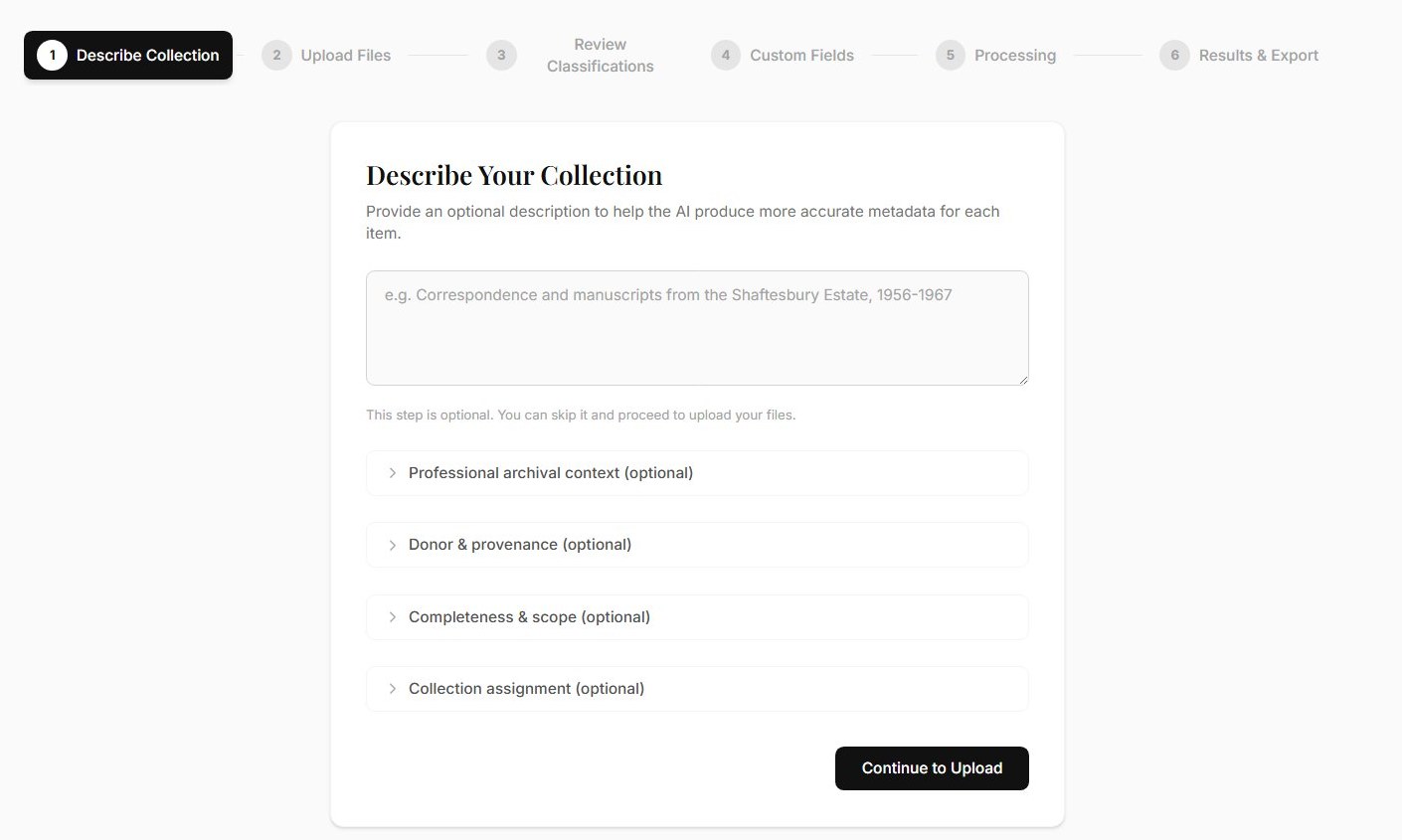
An AI processing & access layer for archives and museums

Turn digitised
backlogs into
standards-ready
records.

And, when the backlog is cleared, into searchable staff and public access. We sit in front of the repository or collections system you already run. We do not replace it.

Free to try · Works with your existing repository or CMS · Human review at every step

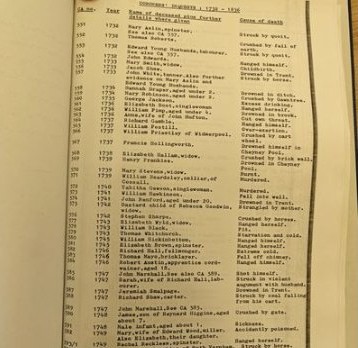
Archivers.ai search results showing archival photographs with AI-generated metadata, confidence flags, and reviewer status
Fig. 01 Staff Explore — full-text search across processed material, with per-field provenance and confidence visible in every record.
Works with the systems you already run AtoM · ArchivesSpace · Axiell · Modes · Adlib · Mimsy · Preservica · Archivematica
The integration layer

The layer between
digitisation and discovery.

Digitisation creates files. Repositories store records. Archivers.ai is the layer in between — the place where files become reviewable, standards-aligned, and ready to leave the platform on the archivist’s sign-off.

01

Digitisation

In-house capture, partner-led scanning, or existing digitised backlogs.

Fed by Capture rigs · Scanning vendors · Backlog drives

02

Archivers.ai

AI-assisted draft metadata, archivist review at every step, standards-aligned export profiles, and staff Explore.

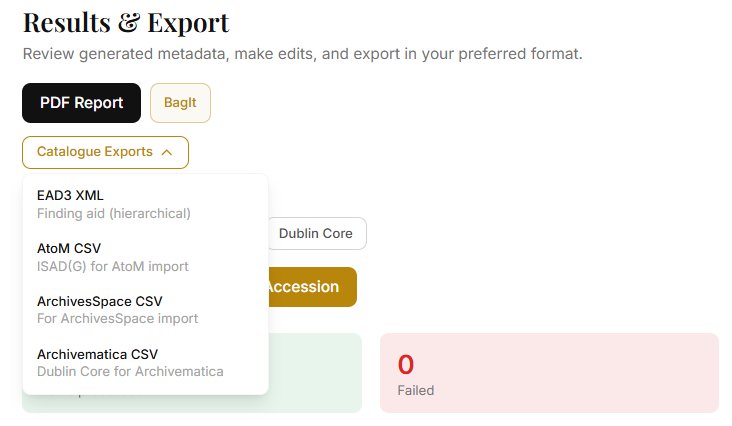
You get ISAD(G) · EAD3 · BagIt · PREMIS · SPECTRUM · Dublin Core

03

System of record

Your repository, CMS, or preservation system. Authoritative. Unchanged.

Works with AtoM · ArchivesSpace · Axiell · Modes · Adlib · Mimsy · Preservica · Archivematica

04

Discovery

Staff research and public-facing access — the retention layer after the backlog is processed.

For Archivists · Curators · Researchers · The public

We are not a system of record. We are not a replacement. We are the layer of work that has to happen before files become records, and the layer of access that keeps them visible after the project closes.

Inside a record

Draft metadata, with the
archivist still in charge.

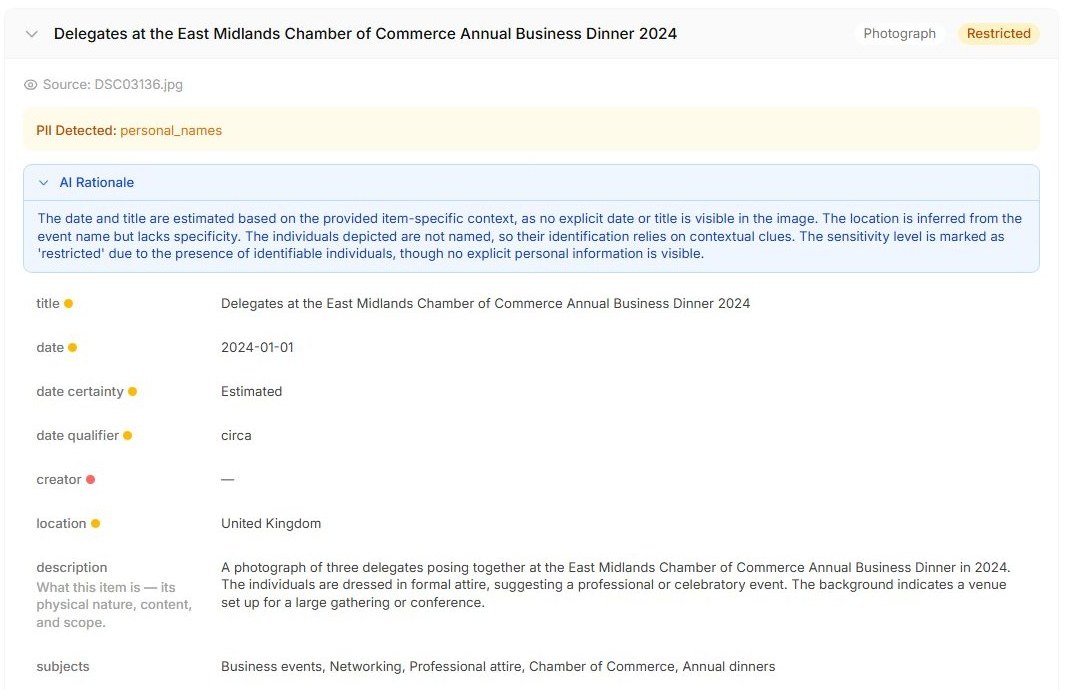
Every AI-assisted field carries a confidence flag and the rationale that produced it. Archivists review, override, and sign off — nothing leaves the platform unreviewed.

Archivers.ai metadata detail panel showing structured fields, AI rationale, confidence flags, and PII detection for a single archival item
a.

Structured fields. ISAD(G)- and SPECTRUM-aligned, ready for export into your repository or CMS.

b.

AI rationale. The reasoning behind each suggestion, alongside the suggestion itself.

c.

Confidence & PII flags. Per-field signals so reviewers prioritise their attention where it matters.

d.

Provenance. Model family, timestamp, and review state recorded in PREMIS — carried through on export.

The commercial story

Two phases.
One platform.

Most teams adopt Archivers.ai to clear a funded backlog. The longer-term value is what comes afterwards: searchable collections, standards-based portability, and public-facing access that helps the value of digitisation outlive the project itself.

Phase I

Funded backlog
reduction now.

The first conversation is almost always about scoping a defined digitisation, backlog-reduction, or cataloguing project — usually with a funder behind it. We make that work go faster, with the archivist still in control of every record before it leaves the platform.

  1. Standards mapping for your existing schemas
  2. AI-assisted draft metadata with confidence flags
  3. Archivist review and sign-off, recorded in PREMIS
  4. Export profiles for your downstream system
  5. Prepaid processing sized to the collection
Phase II

Public value later.

Once the backlog is processed, Archivers.ai becomes the access and discovery layer. Staff use Explore for research; the public uses a discovery portal; and you have engagement evidence to show funders that the digitisation investment is still earning its keep.

  1. Staff Explore — full-text and AI research chat
  2. Public discovery portal for researchers and communities
  3. Engagement evidence for funder reporting
  4. Accessibility-conscious public interface
  5. Institutional access package, sized to usage
Most institutions don’t buy Archivers.ai as software.
They buy it as part of a project.
Audiences

Who it’s for.

Four audiences, four different routes through the same platform. Each link goes to a deeper page written for that specific reader.

i.

For archivists.

ISAD(G)-aligned draft metadata, EAD3 and BagIt export, and human review at every step. Works with your existing repository — AtoM, ArchivesSpace, Preservica, Archivematica — not a replacement for it.

Read more →
ii.

For directors.

A defensible business case for funded backlog reduction now, and a route to long-term public value once the project ends. Standards-aligned outputs, ROI estimator, and the two-phase argument for the board.

Read more →
iii.

For museums.

SPECTRUM-aligned draft metadata, object-level cataloguing, and evidence gathering relevant to museum accreditation processes. Complements your existing collections management system — Axiell, Modes, Adlib, Mimsy — rather than replacing it.

Read more →
iv.

For community archives.

No IT department required. Free to start, simple upload, and standards-aligned outputs suitable for funded digitisation projects. For local history societies, parish records, and volunteer-run archives.

Read more →
Institutional projects

What a project
actually includes.

A funded digitisation or backlog project is a different kind of conversation from a monthly software subscription. Here’s the shape of what we deliver around the platform itself.

i.

Institutional onboarding

Workspace setup, user roles, and a scoped pilot on a representative sample of your collection.

ii.

Standards mapping

Map your existing fonds, accession, or object schemas to ISAD(G), EAD3, SPECTRUM, or Dublin Core export profiles.

iii.

Export profile configuration

Tuned export targets for AtoM, ArchivesSpace, Axiell, Modes, Adlib, Preservica, or Archivematica — tested against a staging instance.

iv.

Prepaid processing credits

Project budgets sized to collection size and complexity, not per-seat monthly plans.

v.

Public access delivery

Optional staff Explore and public-facing discovery portal — the retention layer after the backlog is done.

vi.

Funded project support

Outputs that help teams produce standards-aligned deliverables for funded digitisation projects, including NLHF-style reporting.

Scope my project or How onboarding works

Latest thinking.

Browse the journal →

9 April 2026

7 Surprising Secrets to Winning Your Next Heritage Fund Bid

Most rejected Heritage Fund applications fail on strategy, not significance. Here are seven counter-intuitive secrets that separate winning bids from the rest.

Read →

7 April 2026

Planning Your Heritage Digitisation Project: A Strategic Lifecycle Roadmap

From vision to deposit, a practical ten-step roadmap that shows heritage organisations how to plan, fund, and deliver a digitisation project the NLHF will back.

Read →

5 April 2026

Digital Heritage Compliance: A Governance Framework for NLHF-Funded Projects

NLHF digital outputs must meet strict openness, accessibility, and availability requirements. This governance framework shows exactly what compliance looks like — and how to build it into your project from day one.

Read →
Take the next step

Process the
backlog. Deliver
the access.

Most institutions buy Archivers.ai as part of a defined project. Tell us the shape of yours and we’ll scope the right route — standards mapping, processing credits, public access, the lot.