
You have identified a critically important collection at risk of decay. You have drafted a meticulous plan to preserve it. And yet your National Lottery Heritage Fund (NLHF) application was rejected.
Sound familiar? You are not alone. The most common reason heritage bids fail is not that the collection lacks value — it is that the applicant focused on the past rather than the future.
After studying the latest NLHF guidance — including the Heritage 2033 strategy — speaking with heritage professionals, and analysing what separates funded projects from rejected ones, we have distilled the process into seven surprising secrets. Some of them are counter-intuitive. All of them are practical. And together, they form a blueprint for writing a bid that actually wins.
Here is the first surprise before we even start: for grants between £10,000 and £250,000, there is no deadline. You can submit when you are truly ready. So take a breath, read on, and build a bid worth funding.
Secret 1: The “Perfect” Preservation Project Often Fails
This is the Funding Paradox, and it catches experienced professionals off guard.
An organisation writes a technically flawless proposal — proper file formats, immaculate metadata standards, a rock-solid sustainability plan — and it gets rejected. Why? Because technical excellence alone does not meet the Fund’s criteria.
The NLHF is not a preservation fund. It is an outcomes-based funder. It exists to deliver public benefit from the National Lottery, and that means every project must demonstrate measurable impact on people, communities, and access. A project that saves the heritage but changes nothing about who interacts with it is, in the Fund’s eyes, incomplete.
Understanding this distinction is the single most important shift you can make. Our complete guide to NLHF digitisation project requirements covers the full scope of what the Fund expects. Everything that follows flows from it.
Secret 2: It Is Not About the Objects — It Is About the People
If Secret 1 is the mindset shift, Secret 2 is where it gets specific.
The NLHF lists four investment principles, but the primary driver for people-centred projects is “Inclusion, access and participation.” One outcome is mandatory for every funded project, regardless of size:
“A wider range of people will be involved in heritage.”
Read that again. It does not say “the heritage will be preserved.” It says a wider range of people will be involved. If your project digitises an entire archive but only the same five researchers ever use it, you have failed that outcome.
This is where many organisations struggle. How do you genuinely involve new audiences — people who have never set foot in a record office — with a collection of 19th-century parish records or industrial photographs?
The answer lies in removing the barriers that keep non-experts out. Traditional archival search requires specialist knowledge: you need to know the right reference codes, understand hierarchical finding aids, and speak the language of cataloguing. That excludes the vast majority of the public.
Archivers.ai addresses this directly. Its Research and Explore AI chat interface lets anyone query a collection in plain, natural language — no archival training required. A school student researching local history, a descendant tracing family connections, or a community group exploring neighbourhood heritage can all interact with the collection on their own terms. That is a concrete, demonstrable answer to the “wider range of people” mandate.
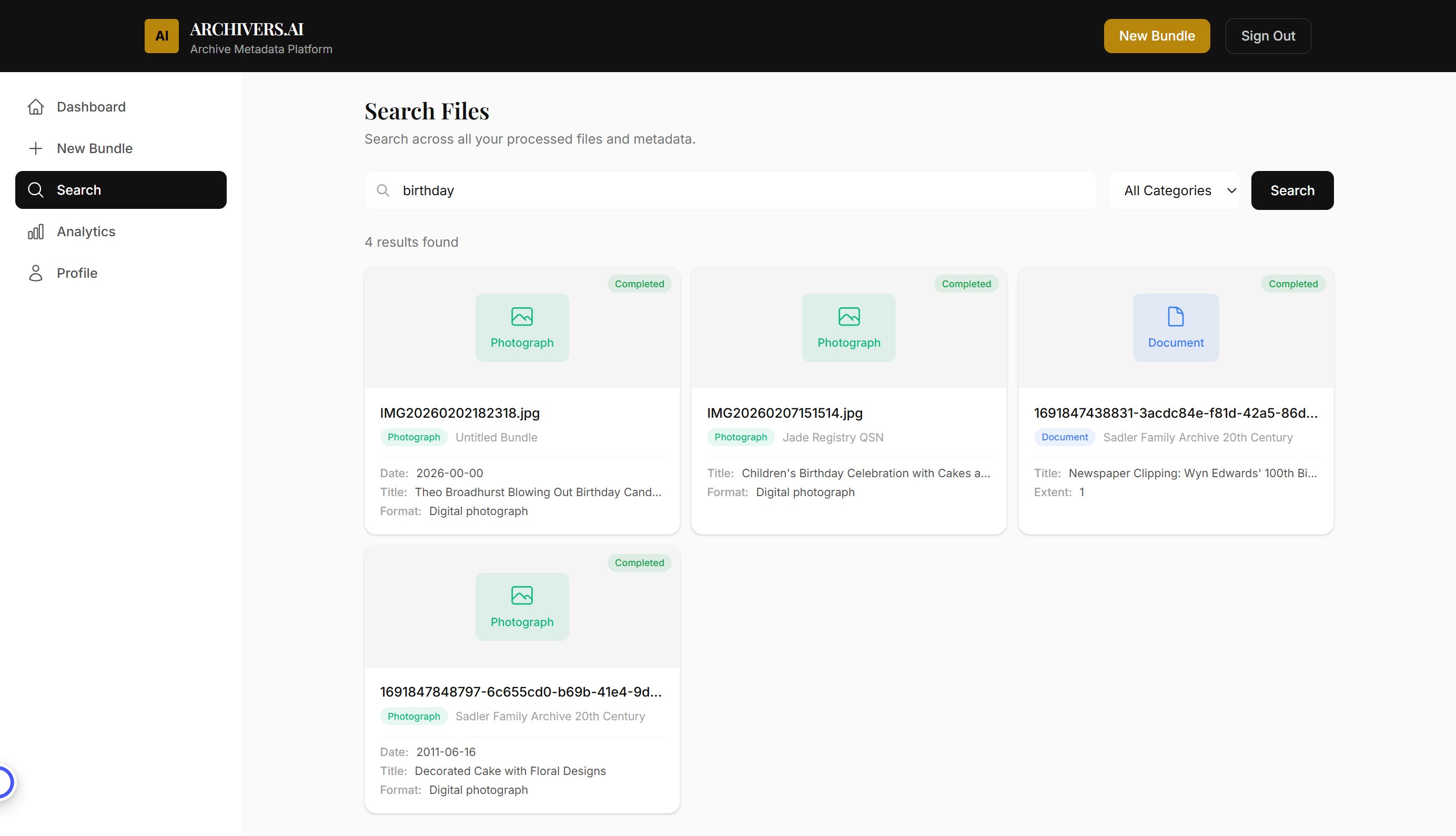
When you write your application, do not just promise wider access. Show the Fund how you will deliver it, with tools that make the collection genuinely usable by non-specialist audiences. As heritage consultant Claire Adler advises:
“Print out the outcomes guidelines and turn them into your office wallpaper, memorise them and make sure that the project you develop is meeting them.”
Secret 3: Consultation Means Bringing a “Messy” Draft, Not a Blank Page
The NLHF expects you to consult with your community before submitting your application. But here is the secret that experienced bid-writers know: never approach a community group with a blank piece of paper.
It sounds democratic to say, “What would you like us to do?” In practice, it is paralysing. Most people cannot design a heritage project from scratch — and asking them to do so produces vague, unusable feedback.
Instead, bring a “messy” draft. Present preliminary ideas, rough plans, even imperfect examples of what the finished project might look like. It is psychologically much easier for a participant to say “I don’t like that” or “What about adding this?” than to invent something from nothing. This consultative friction produces stronger project designs because it forces your organisation to move from what you want to what the community actually needs.
Here is a practical tip: use Archivers.ai to quickly process a sample of your collection before your consultation sessions. Upload a representative batch — say, fifty items — and let the AI generate enriched metadata, transcriptions, and classifications. Then bring those results to your community meetings. People can see, touch, and react to something tangible: “Look, the AI transcribed this letter from 1892. Is the context right? What do you know about the person who wrote it?”
That is infinitely more productive than asking, “What should we do with these boxes of old letters?”
Secret 4: Your Smartphone Is a Legitimate Archival Tool
Many community archives and small heritage organisations stall at the digitisation stage because they believe they need a high-end photography studio. They request enormous equipment budgets that make fund assessors nervous — and sometimes delay the project by months while sourcing gear.
Here is the reality: low-cost digitisation is a low-risk entry point to pilot your ideas. High resolution is an asset, but it is not the primary barrier to access. Sharing something is always better than sharing nothing.
The Folger Shakespeare Library has successfully used smartphones to capture and share thousands of images. The “Archivist in a Backpack” concept proves you can deliver professional results with gear that fits in a single bag. Your budget-friendly toolkit might include:
- Smartphones — excellent for photography and even 3D scanning with modern apps
- Handheld digital recorders — ideal for capturing high-quality oral histories
- Laptops or desktops — for essential data entry, cataloguing, and editing
- Rental equipment — consider borrowing or renting high-end gear from partner organisations to keep capital costs down
The important thing is what happens after capture. Once your volunteers have photographed a collection with their smartphones, those images need to be classified, transcribed, and described with proper metadata. This is where Archivers.ai fits into the workflow:
- Capture with smartphones or affordable equipment
- Upload to Archivers.ai for AI-assisted classification, OCR, and metadata enrichment
- Review — archivists and volunteers check the AI’s work, correct errors, and add local knowledge
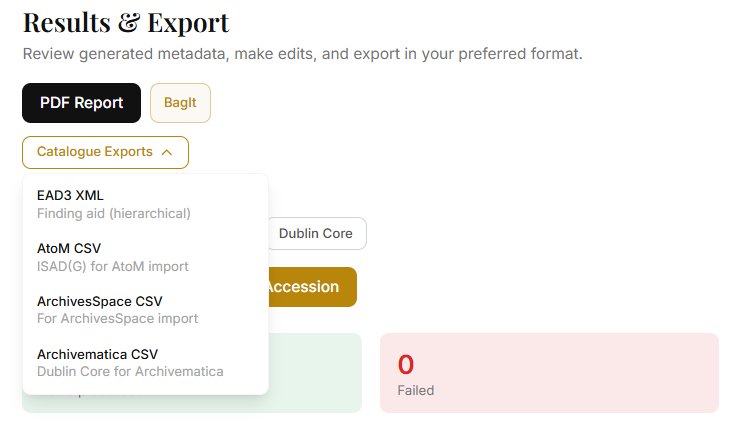
- Export to archival standards (EAD3, Dublin Core, BagIt) ready for your catalogue or repository
This workflow lets you start small, prove your methodology, and scale up — exactly what the Fund wants to see. It also means your equipment budget stays lean, leaving more funding for the people-centred activities that score highest with assessors.
Secret 5: Open Access Is a Non-Negotiable Contractual Mandate
This is the secret that catches organisations off guard after they have been awarded the grant. When you accept NLHF money, you are entering into a contract regarding your digital outputs. Because the work is funded by the public, the Fund insists on “unfettered access” to ensure public benefit.
The NLHF defines digital outputs broadly:
“Photographs, sound and video recordings; electronic documents and databases; website and app content; software and code; 3D models; and environmental and geographic surveys.”
The contractual rules of openness are specific and binding:
- Availability: Outputs must remain available for 5 years (grants between £10,000 and £250,000) or 20 years (grants over £250,000)
- Default licensing: All original content must use a Creative Commons Attribution 4.0 International (CC BY 4.0) licence. The Open Government Licence is an alternative for public sector bodies
- Data and code: Metadata and software code must be released under CC0 1.0 Universal Public Domain Dedication
- Accessibility standards: Websites must meet W3C Single A (grants up to £250,000) or W3C Double A (grants over £250,000)
Planning for open access from day one is essential. If your cataloguing system locks metadata into a proprietary format, you will struggle to meet these requirements at the end of the project — precisely when time and budget are tightest.
Archivers.ai’s export system is designed with open licensing in mind. Metadata exports are structured for CC0 1.0 dedication, and the platform’s sensitivity classification system — which flags items as public, restricted, or closed — combined with automatic PII (personally identifiable information) detection, helps you correctly identify the NLHF’s permitted exceptions before applying open licences. You do not accidentally publish sensitive personal data, and you do not unnecessarily restrict items that should be open.
Build your open access strategy into the project plan from the start, not as an afterthought. Our guide to budgeting for digitisation in an NLHF bid covers how to include licensing and accessibility costs from the outset. The Fund assessors will notice.
Secret 6: The “3-2-1 Rule” Is Your Digital Survival Strategy
Digital archives are inherently more fragile than physical ones. They face threats that no amount of acid-free tissue paper can prevent: bit rot (the gradual decay of digital data), hardware obsolescence, software incompatibility, and catastrophic storage failure. The NLHF expects you to address digital sustainability in your application, and the gold standard is the 3-2-1 Rule:
- Keep 3 copies of your data
- Store them on 2 different media types (e.g. a local hard drive and a cloud server)
- Keep 1 backup copy offsite
This is not optional guidance — it is the minimum expectation for any serious digital preservation project. Your application should name specific storage providers, describe your backup schedule, and explain how you will verify data integrity over time.
Integrity verification is where many projects fall short. How do you know that the file you backed up six months ago is still identical to the original? This is where hash manifests — checksums generated at the point of creation — become essential. For a comprehensive look at storage strategy, see our guide to digital archive backup and storage.
Archivers.ai’s BagIt export creates integrity-verified packages with hash manifests baked in. Every file in your export bag includes a checksum that can be verified at any point in the future. PREMIS preservation metadata is included as standard, documenting the format, provenance, and migration history of each digital object. These are exactly the mechanisms that directors and heads of collections need to demonstrate sustainable digital stewardship to funders — and they are generated automatically, not bolted on after the fact.
Secret 7: AI Can Help You Work, But It Cannot Tell Your Story
The NLHF permits the use of artificial intelligence to assist with applications and project delivery. The Fund’s guidance on using AI comes with a pointed warning: AI is a master of generic buzzwords but often fails to capture the unique local importance of your heritage.
There is also a practical concern. An AI-generated application that reads like every other AI-generated application will not stand out. Fund assessors read dozens of bids per cycle. They can spot generic language — and they are looking for authenticity, local knowledge, and genuine community voice.
The same principle applies to your project delivery. AI can process images, transcribe documents, and suggest metadata at extraordinary speed. But it cannot know that the woman in photograph #347 is actually the founder of your town’s first lending library, or that the handwriting in a particular ledger belongs to a locally significant figure. That context — the human story — is what transforms a digitised collection from a database into heritage.
This is precisely why Archivers.ai is built around a human-in-the-loop approach. Unlike generic AI tools that process and publish without oversight, Archivers.ai treats AI as the first pass, not the final word:
- The AI transcribes handwritten documents — but the archivist corrects errors and adds context
- The AI suggests classifications and date ranges — but the evidence behind each is displayed so the human reviewer can judge every suggestion
- The AI detects named entities (people, places, organisations) — but volunteers with local knowledge confirm identities and add the stories behind the names
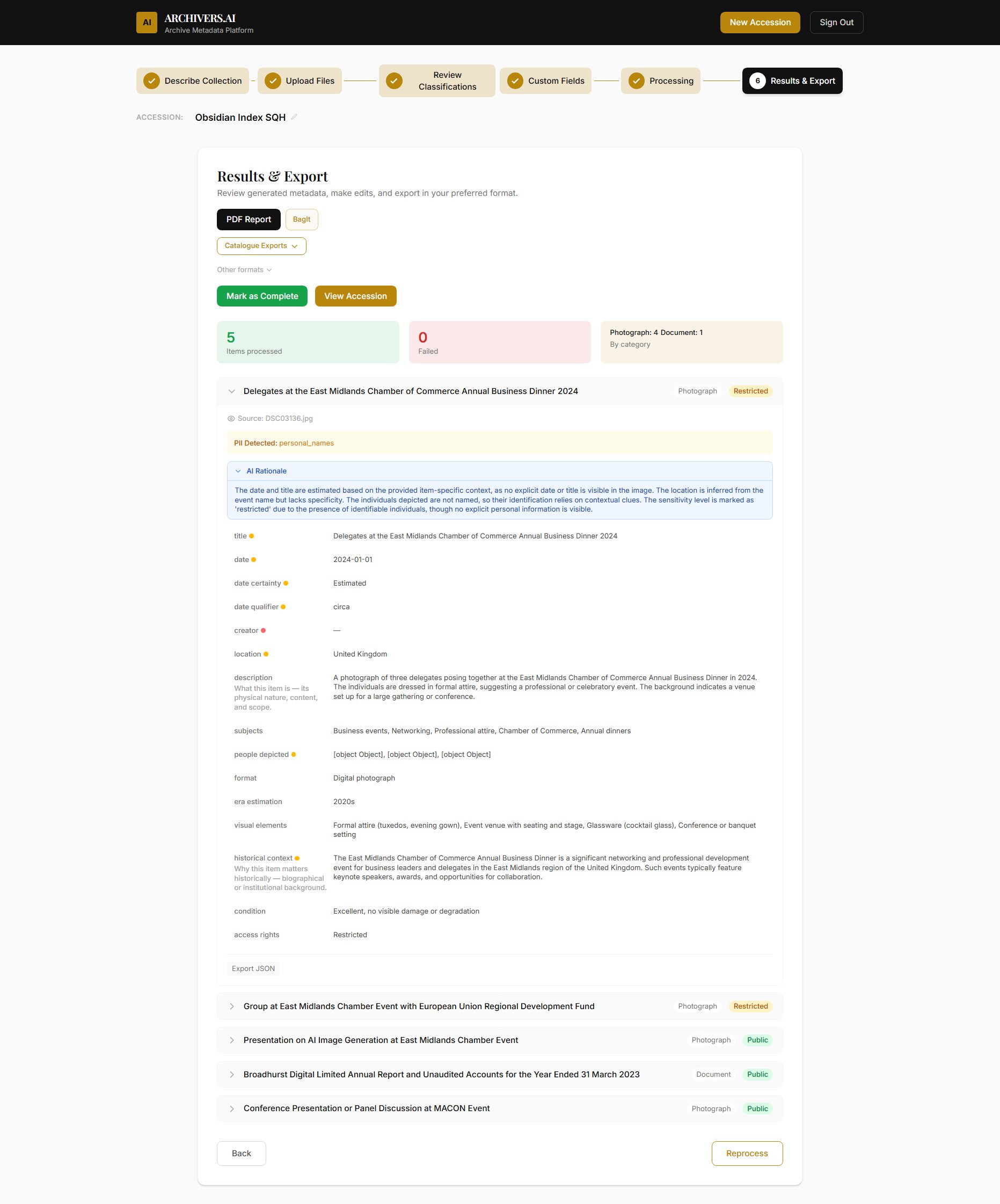
This human-in-the-loop approach satisfies both the Fund’s expectations and good archival practice. For a deeper look at how AI can help you meet digital good practice requirements, see our guide to meeting NLHF digital good practice with AI. The AI does the heavy lifting — the tedious, repetitive work of initial transcription and metadata extraction that would take a small team months. The archivist and the community add the irreplaceable human layer: the context, the corrections, and the unique local story that no algorithm can generate.
Your application should make this distinction explicit. Show the Fund that you understand AI as a tool, not a replacement — and that your project has a clear workflow for human review and community contribution at every stage.
Beyond the Application: What Winning Really Looks Like
A successful heritage bid is a blend of “People-Power” and “Digital Openness.” As you draft your application, do not just ask what you can save — ask how the process of saving it will change your organisation.
The Fund does not want to see a preserved archive sitting in a dark room. They want to see an organisation evolving to meet the needs of a diverse public. They define heritage as “anything from the past that you value and want to pass on to future generations.” If you can prove that your community values it as much as you do, you are halfway to a winning bid.
Here is a summary of the seven secrets and how they connect:
| Secret | Core Principle | What It Means for Your Bid |
|---|---|---|
| 1. The Funding Paradox | Outcomes over preservation | Frame everything around impact, not technical merit alone |
| 2. People, Not Objects | Inclusion is mandatory | Show how new audiences will engage with the collection |
| 3. Messy Drafts | Consultative friction | Bring tangible examples to community sessions |
| 4. Smartphones Work | Low-cost entry points | Start small, prove your methodology, then scale |
| 5. Open Access Contract | Digital openness is binding | Plan for CC BY 4.0 and CC0 from day one |
| 6. The 3-2-1 Rule | Digital survival | Name your backup strategy and verify integrity |
| 7. AI as Tool, Not Author | Human-in-the-loop | Use AI for efficiency, humans for authenticity |
The thread running through all seven secrets is this: the NLHF funds projects that are people-centred, digitally open, and organisationally sustainable. The technical side — digitisation, metadata, preservation — matters enormously. But it only matters in service of those three principles.
Archivers.ai exists to bridge the gap between People-Power and Digital Openness. It handles the technical complexity — AI-assisted cataloguing, standards-aligned exports, integrity-verified preservation packages — so that your organisation can focus its energy where the Fund is actually looking: on community engagement, wider access, and the human stories that make your heritage worth preserving.
If you are preparing a Heritage Fund bid and want to see how Archivers.ai fits into your project plan, discuss your NLHF project with us or start free. We have helped community archives, museums, and record offices across the UK build stronger applications with concrete digital methodology — and we would be glad to help you do the same. Museum directors and heads of collections can also explore our dedicated heritage funding resource for further support.
The final takeaway: Heritage is not what you have. It is what you value and choose to pass on to others. Make your bid reflect that.