Three phases, six documented steps.
Nothing is scaled up until a sample has been reviewed by your archivists and the mapping is written down.
Steps one and two
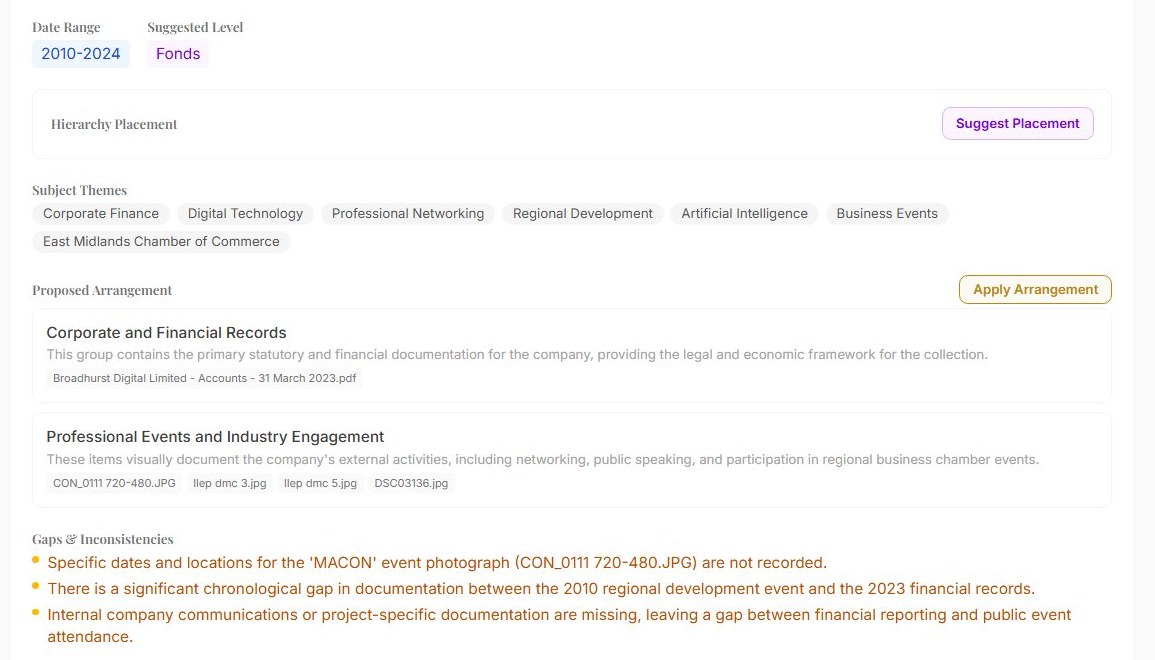
Scope the project, map the standards.
A short call on systems, collection and funding stage, then a workshop that turns your schemas into a documented mapping.
- Current systems, collection size, funding stage
- Field-by-field mapping to your export targets
- Vocabularies, sensitivity rules, rights policy
Steps three and four
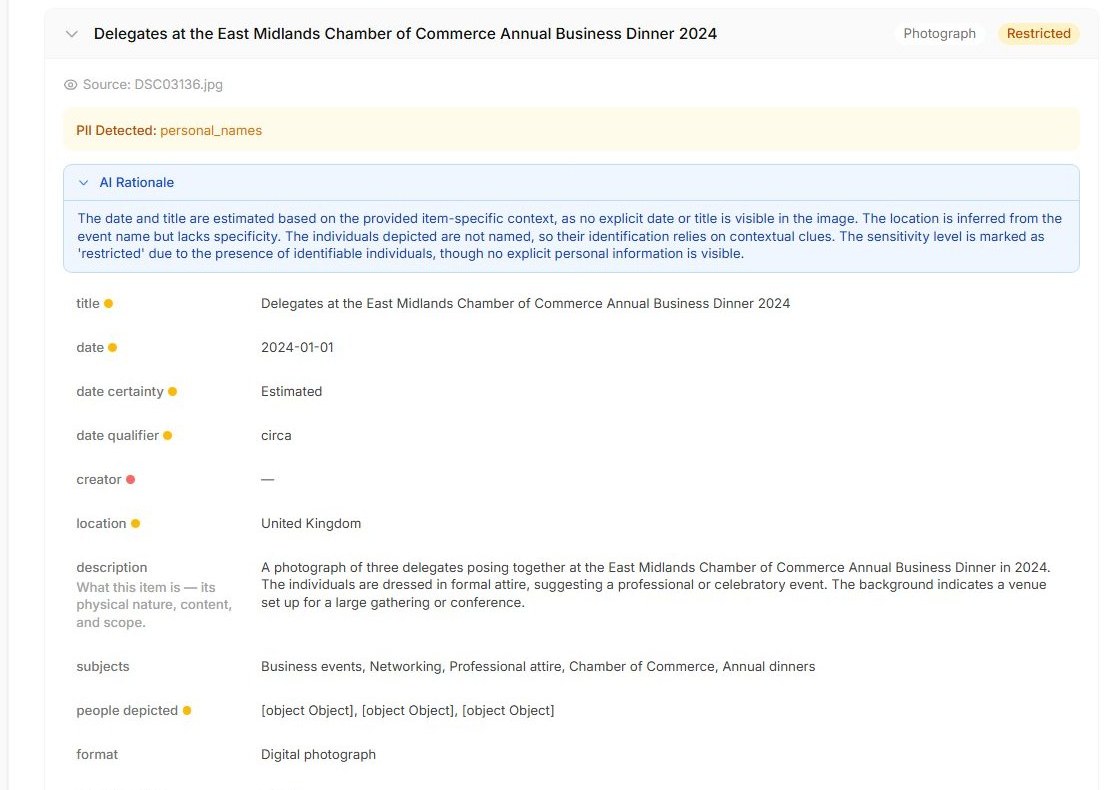
Refine on a sample, then configure.
We process a representative sample through the agreed mapping. Your archivists say what is working, and the rules are tuned before scaling.
- Sample across every material type
- Descriptive style set for your organisation
- Export profile tested on a staging instance
Steps five and six
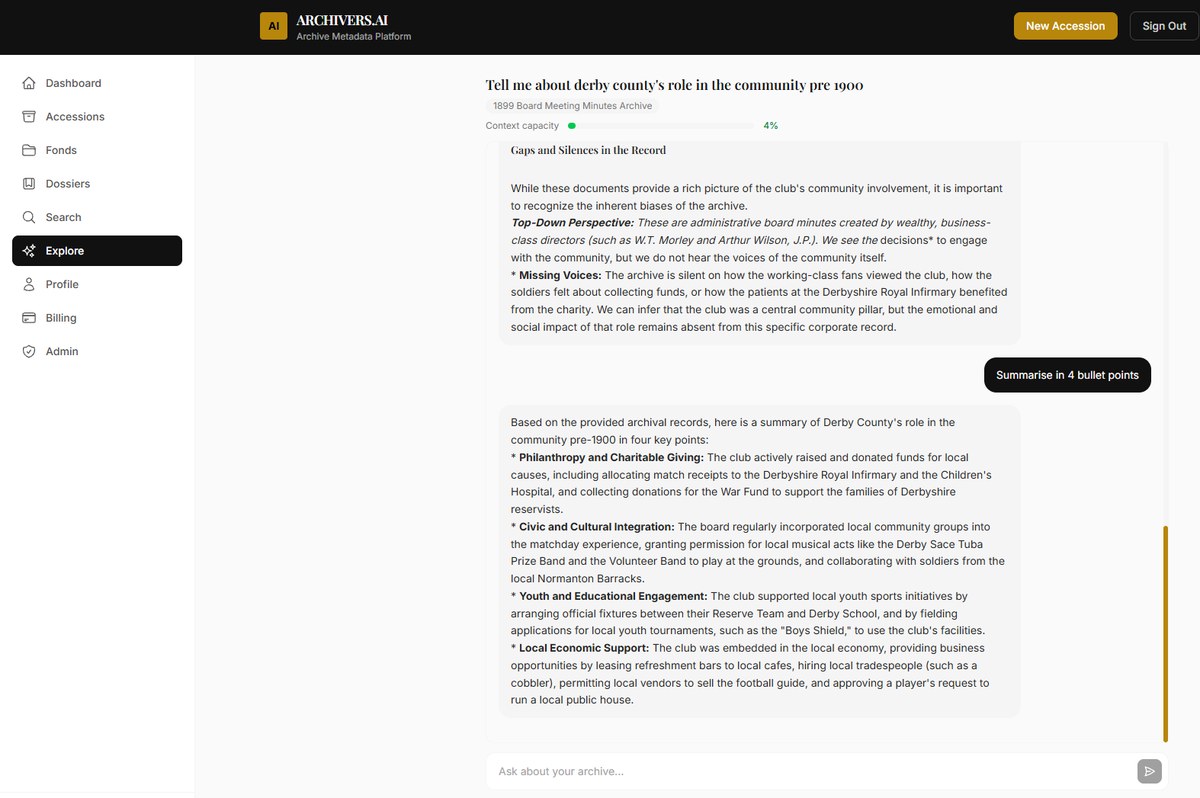
Deliver, then keep the access.
Your team processes the backlog in a configured workspace, and the conversation shifts to what survives the project closing.
- Roles, review workflow, credits sized to scope
- Regular checkpoints during delivery
- Staff Explore, public discovery, funder reporting