The Platform
From upload to reviewable catalogue record, to export, to staff and public access. AI-assisted, standards-aligned, and human-reviewed at every step. Archivers.ai sits in front of your existing repository or CMS — it does not replace it.
Works with your existing systems
Export profiles for AtoM, ArchivesSpace, Axiell, Modes, Adlib, Mimsy, Preservica, and Archivematica. Your repository or collections management system remains the system of record.
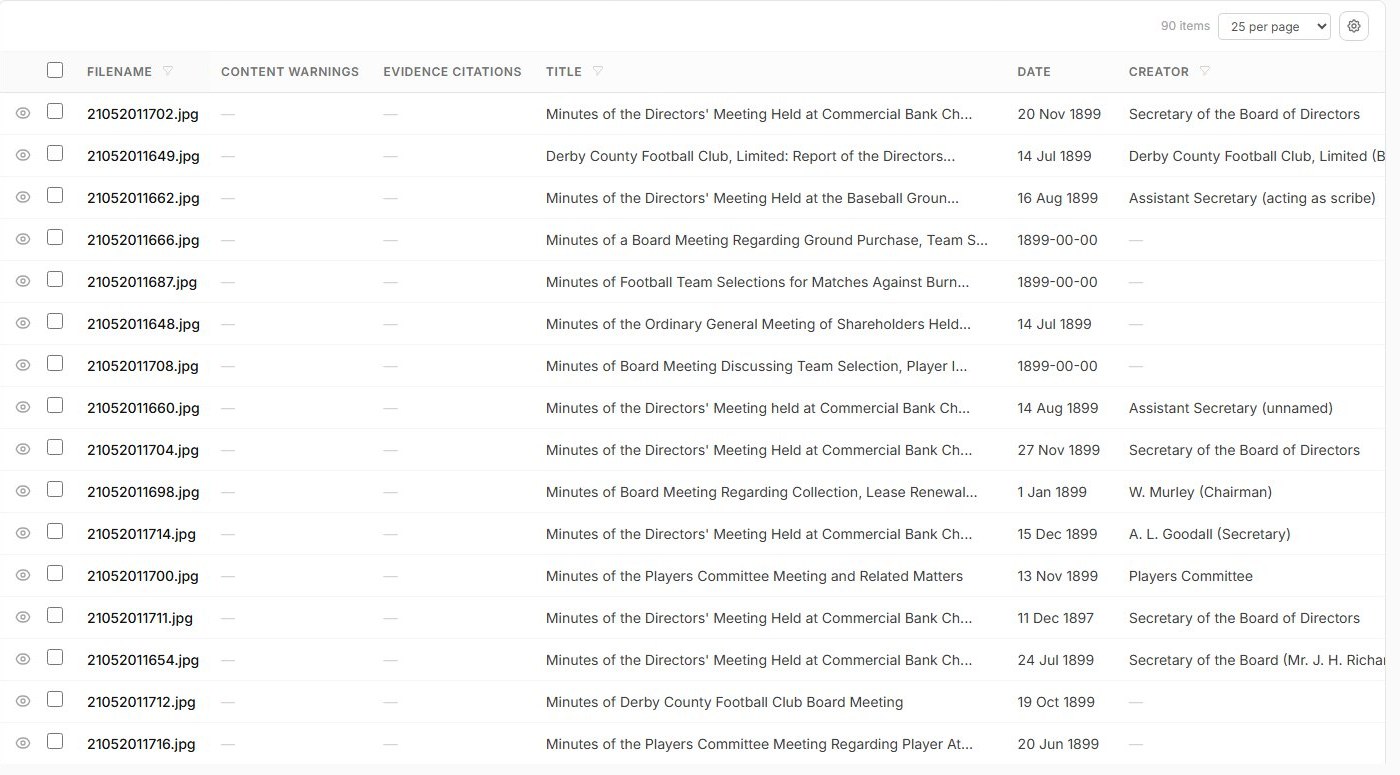
Documents, photographs, audio, video, and multi-page TIFFs across common archival and museum formats. Drag and drop or bulk upload entire collections.
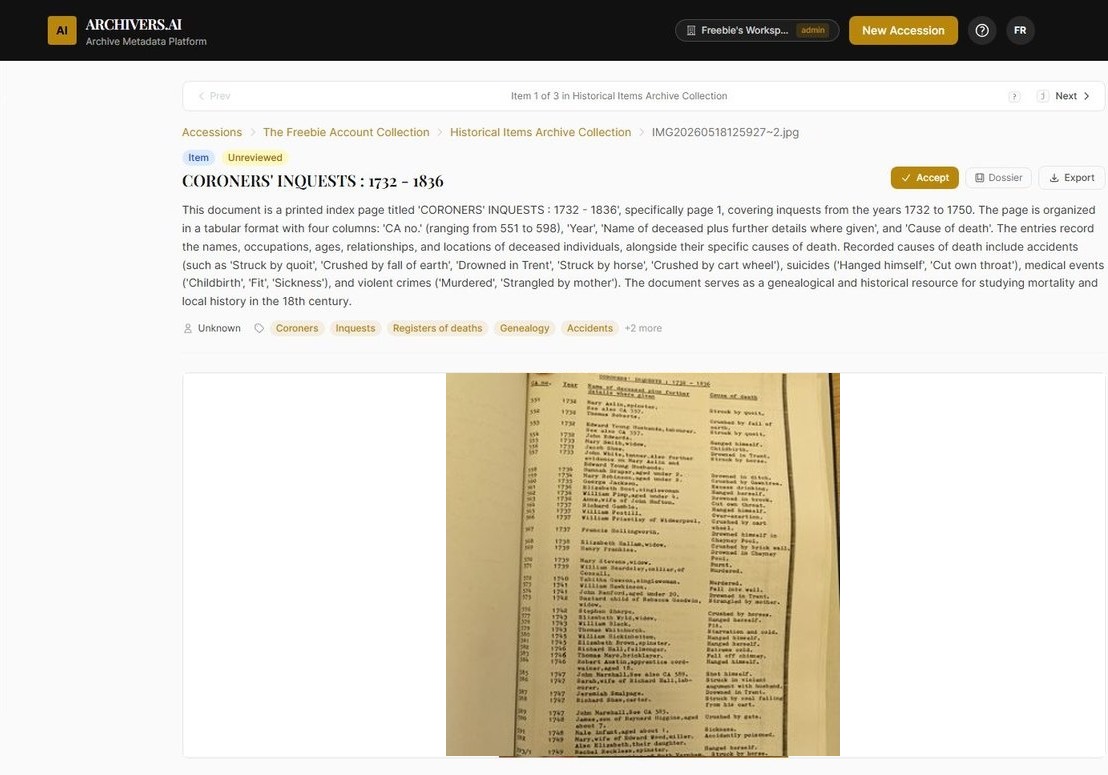
OCR for printed and handwritten text, automatic document type detection, date extraction, named entity recognition across people, places, and organisations.
18+ structured fields generated automatically: title, description, date, creator, subject, format, language, rights, provenance, and more — all standards-aligned.
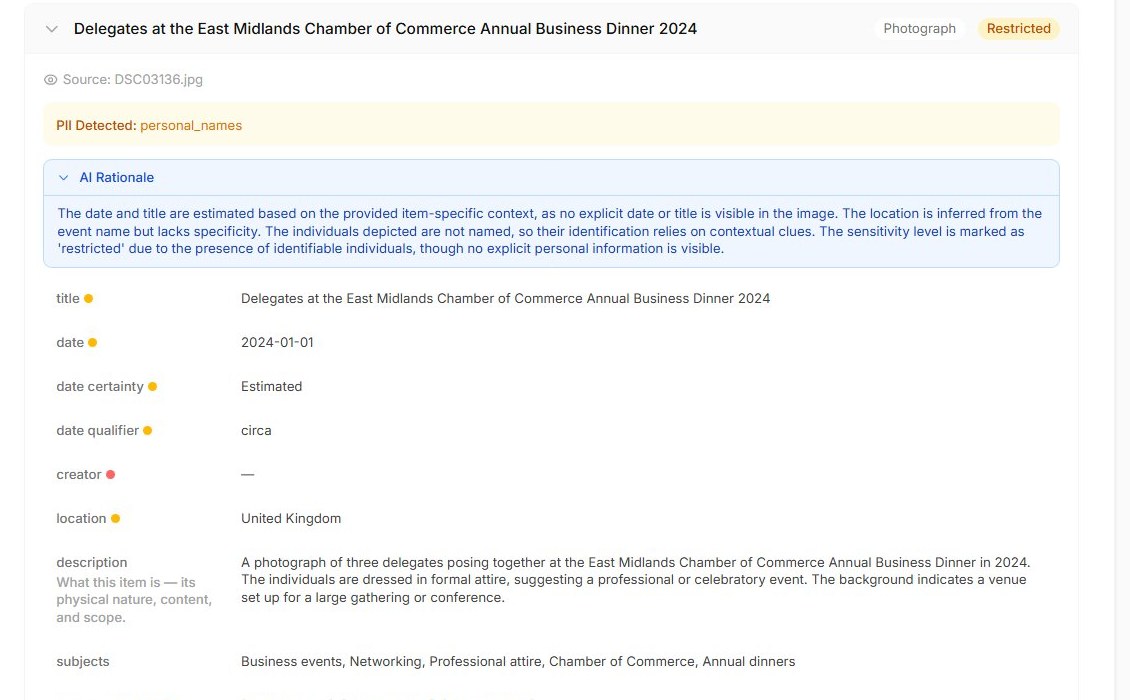
Every AI classification goes through your review queue. Approve, edit, or override — nothing is published without your sign-off. Accuracy you can trust.
Search across your entire collection — transcribed text, metadata fields, and AI-generated descriptions. Find any item in seconds.
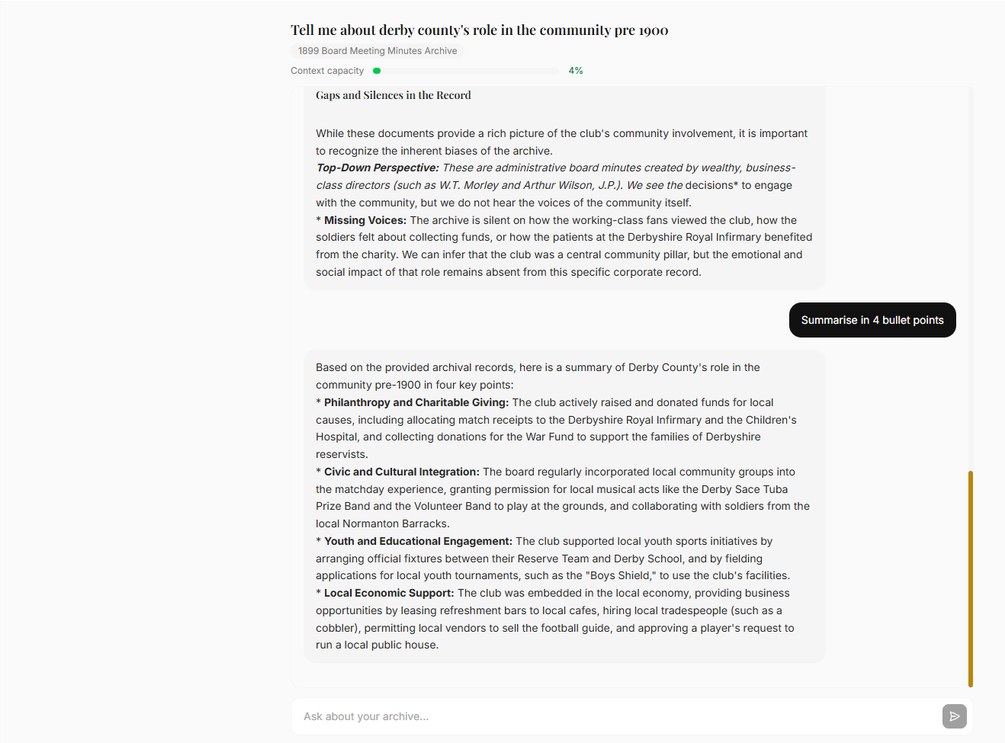
Ask questions across your archive in plain English. The AI draws on transcripts, metadata, and descriptions to surface connections and insights.
Organise your collection in a proper hierarchical structure. Group items into accessions, arrange accessions into fonds — exactly as archival standards require.
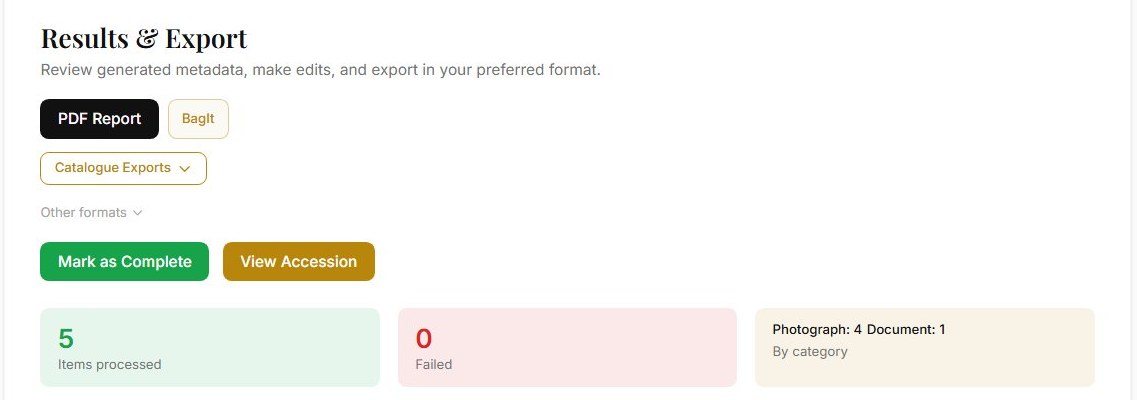
EAD3, BagIt with PREMIS, CSV, and Dublin Core. Outputs designed to support NLHF-style digitisation workflows. One click to export in the format your downstream systems need.
Automatically identifies potential copyright issues and access restrictions. Set item-level rights statements to protect sensitive material.
Who We Help
ISAD(G)-aligned metadata, EAD3 export, BagIt packages. Professional tools for professional cataloguers.
Learn more →A clear business case, standards-aligned outputs for funded digitisation projects, and measurable backlog reduction. Plus a retention route through staff Explore and public access.
Learn more →SPECTRUM-aligned draft metadata and object-level cataloguing that supports consistent workflows relevant to museum accreditation processes. Complements your existing CMS — it doesn’t replace it.
Learn more →No IT department required. Simple upload workflow, free to start, and outputs designed to support NLHF-style digitisation workflows and grant reporting.
Learn more →Common Questions
What file types does The Archiver support?
Documents (PDF, Word, scanned images), photographs (JPEG, PNG, TIFF including multi-page), audio (MP3, WAV), and video. Most common heritage collection formats are supported.
How does the AI classification work?
The Archiver's AI reads each uploaded file — running OCR on documents and images, transcribing audio and video — then generates structured metadata across 18+ fields. Every AI classification is presented for your review before it is published.
What metadata standards do you support?
Archivers.ai generates ISAD(G)- and SPECTRUM-aligned draft metadata and exports in EAD3, Dublin Core, BagIt with PREMIS, and import CSVs. Outputs are designed to support NLHF-style digitisation workflows and downstream systems and services that use EAD-based imports. Formal acceptance by any specific programme depends on the programme’s own requirements.
Can I export to my existing collections management system?
Yes. The Archiver exports in CSV, EAD3, and Dublin Core — standard formats accepted by most collections management systems including Axiell, Modes, Adlib, and others.
Is my data secure?
Yes. Customer collection data is not used to train foundation AI models — we follow the no-training commitments of our AI model providers. You retain ownership of your archive and can export or delete your data at any time. See the Trust page for full detail on data handling, sub-processors, and exit.