Channel shift, delivered

Every heritage service has the same story: a building full of fantastic material, and access limited by the history of the listing.

“We hold the history of that, but we can’t find it. We didn’t even know it was there.”

— head of a county heritage service

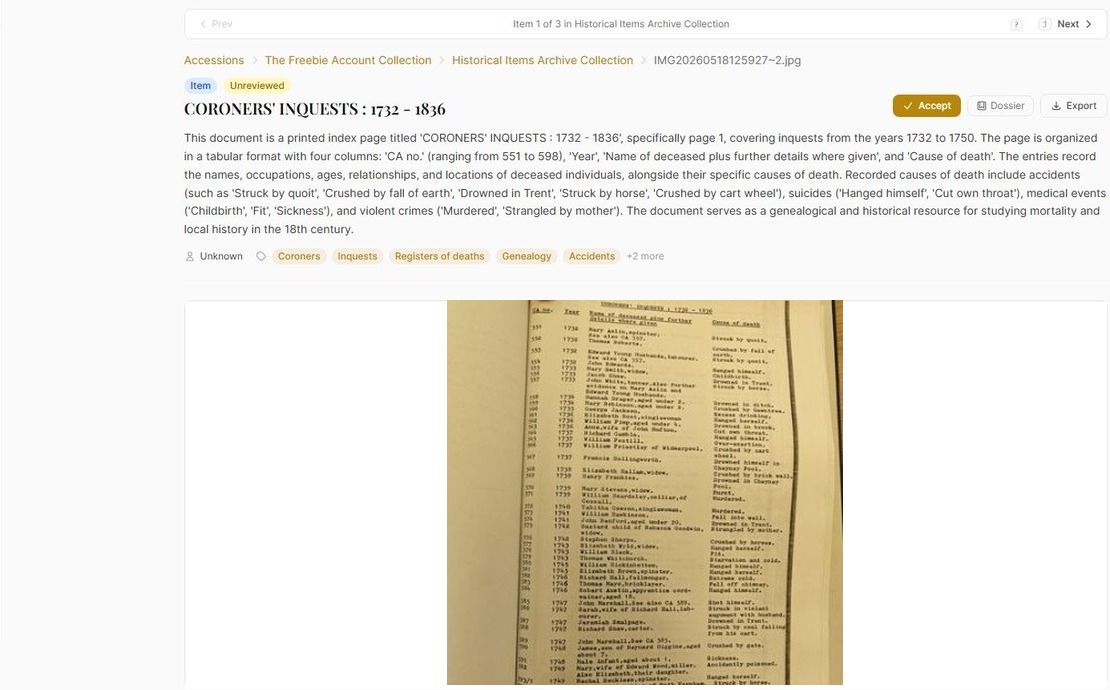
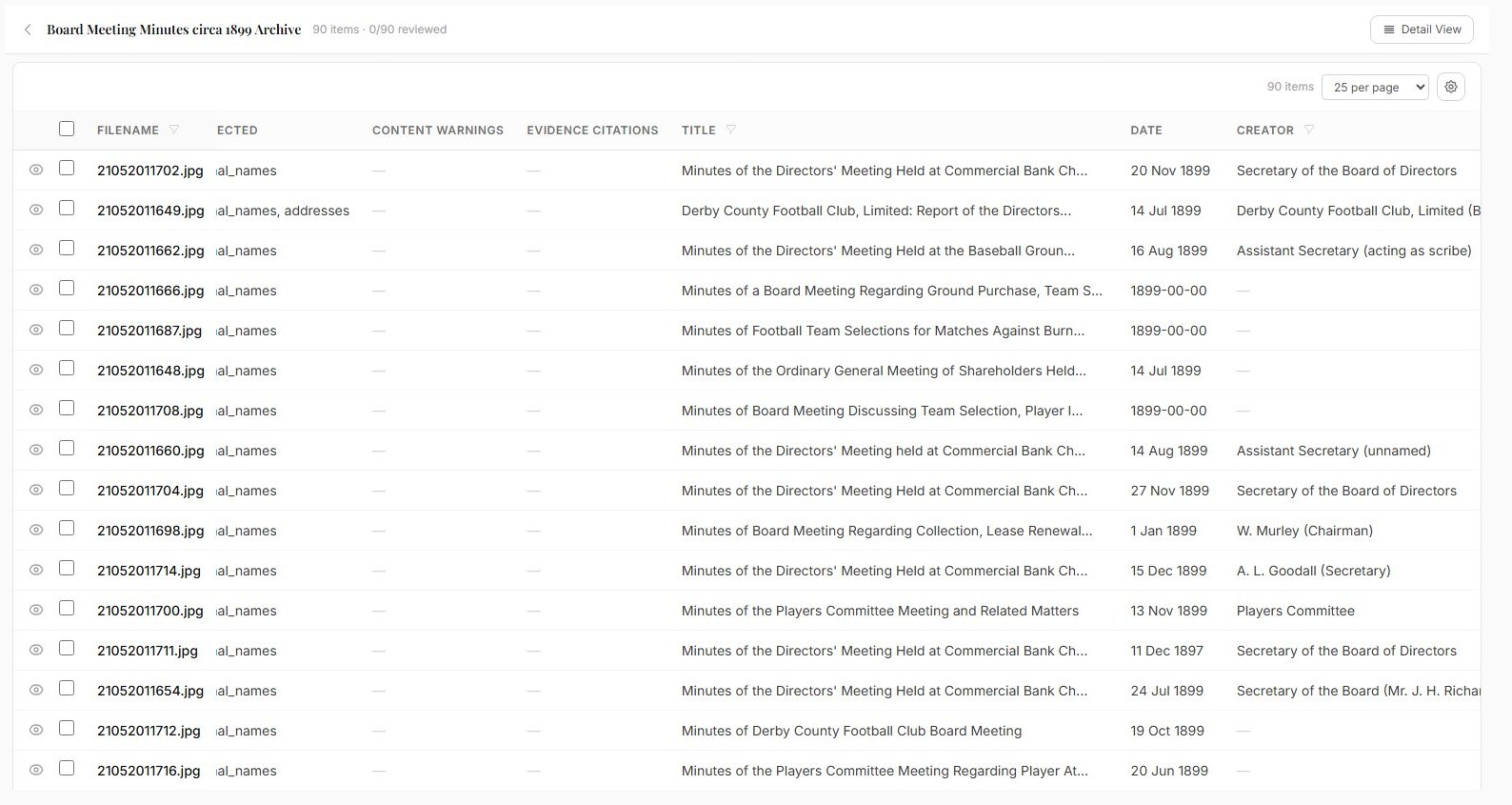
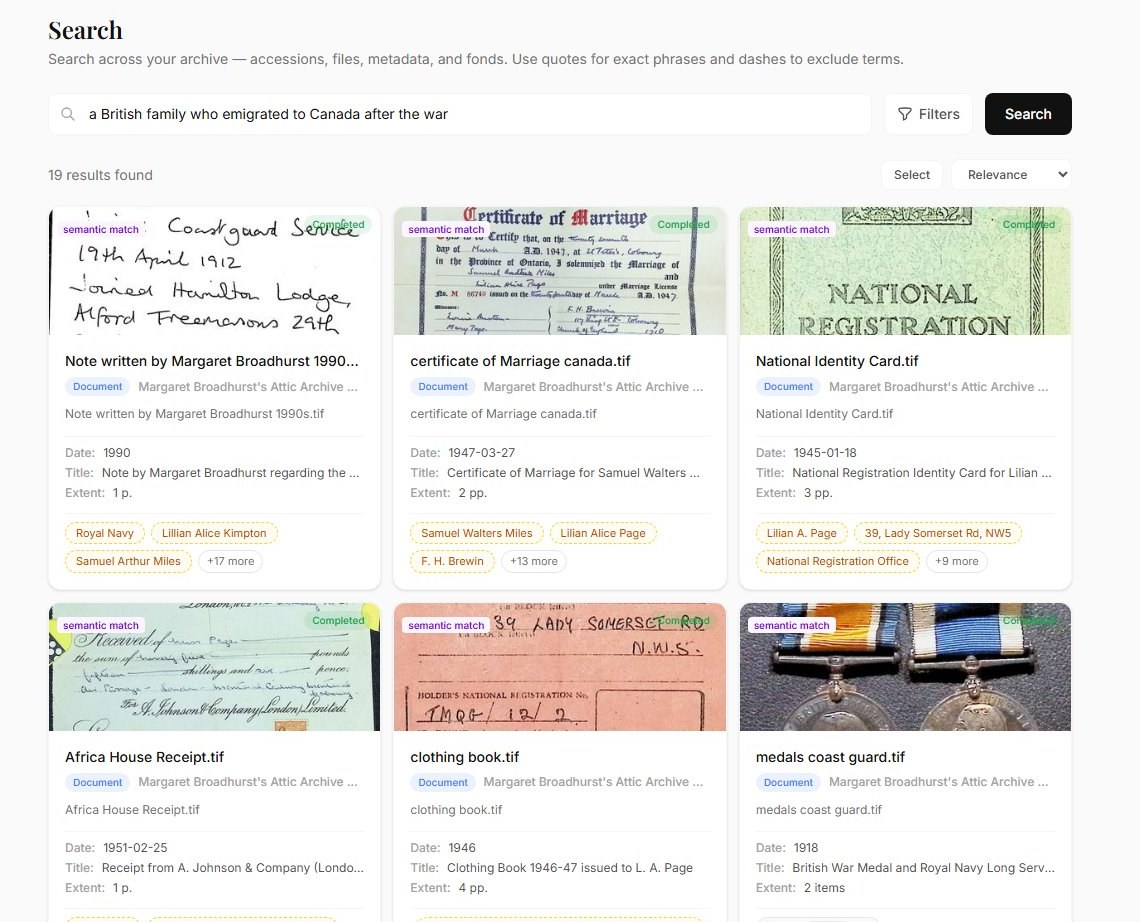
Box lists give poor subject access; item-level cataloguing has never had the capacity it needs; and most holdings are overwhelmingly paper — material that will never be economically digitised. Archivers.ai addresses the listing itself: AI drafts standards-aligned catalogue records — from digitised files or from a phone photo of the physical item — and your archivists review, amend and accept every field before anything enters the catalogue. Even a one-line entry is a finding tool. Everything becomes findable; the archivist decides what’s published.

That is what a channel-shift mandate actually needs: more of the collection described, searchable, and reaching the public online — including the paper you’ll never digitise. The efficiency is real, but it’s the enabler, not the point: skilled staff and volunteers move from data entry to review, engagement and outreach — the work only humans can do.

Access

the headline metric

items described — and findable — that would never otherwise be done

Every field

review gate

AI drafts; your archivists decide — nothing is published without a human

UK/EU

data residency

AI processing in European data centres, built for public-sector sign-off

Four people say yes. Here’s a page for each.

A heritage service doesn’t buy the way SaaS is bought. A service lead sponsors it, an archivist champions it, a standards specialist validates it, and procurement gates it. We’ve written for all four.

On CALM? The clock is running.

Most county services are on CALM — and CALM is reaching end-of-life.

If your service is facing the forced migration, you’re not alone: sector archivists tell us there are hundreds of services working out where to go next. We’ve written an honest page about where Archivers.ai fits in that decision — the migration workflow via CALM’s own CSV/EAD exports, how the export “gunk” gets cleaned during onboarding, and how your reference numbers are preserved exactly as they are. Including what we don’t do.

Read the CALM migration page

Grants are how the sector buys

Core budgets rarely stretch to cataloguing any more. Grant programmes still do — and AI-assisted cataloguing fits them as a line item.

Funded projects are the natural purchase vehicle for a heritage service: a National Lottery Heritage Fund bid with a digital access outcome, or a cataloguing grant such as The National Archives’ Archives Revealed programme. Archivers.ai is designed to slot into that budget line — cataloguing of a defined collection, public hosting, and standards-aligned outputs that support NLHF-style digitisation workflows and funder reporting. Because every record is archivist-reviewed with a full audit trail, the work stands up to the scrutiny a funded project invites.

Planning a bid? We’ll help you shape the cataloguing element — scope, outputs, and the access story funders now prioritise over cataloguing alone.

Heritage funding & NLHF Talk to us about a bid

Convene a task-and-finish group. Test us.

The evaluations that work in this sector are run by a group, on real material — not decided from a demo.

Our recommended path is a Backlog Sprint: a fixed-scope, 30-day pilot, scoped on a call. Convene a task-and-finish group — your champion archivist, a records-close standards specialist, someone from digitisation — and give each of them a seat. Put a real accession through: something messy, something handwritten, something you suspect will trip it up. Your specialists should try to break it; the review queue, confidence scores and audit trail are theirs to interrogate.

You end the pilot with reviewed records from your own collection, your team’s own verdict, and concrete evidence for the service lead to take forward — including to a funder. And because the platform exports to open standards formats, nothing you do in a pilot locks you in.

Book a Backlog Sprint See institutional onboarding
Take the next step

The building’s full of history. Make it findable.

Book a fixed-scope Backlog Sprint for your task-and-finish group, or join the early-access waitlist — and tell us which system you’re on and whether a bid is in play.

UK/EU-resident AI · human-review gated · standards-native exports · grant-line-item friendly