The AI does the first draft. You stay the archivist.

Archivers.ai drafts ISAD(G)-aligned descriptions with per-field confidence scores — and nothing enters your catalogue until you accept it. Catalogue the material that would never otherwise be done, without compromising on standards.

The pressures on archivists today

📄

ISAD(G) compliance

Funders and partners expect records that conform to the International Standard Archival Description. Producing these manually at scale is time-consuming.

📦

Growing backlogs

Accessions arrive faster than cataloguing capacity. Uncatalogued material is inaccessible material — and the backlog compounds year on year.

🔍

AI you can't audit

Generic AI tools put text straight into your records with no review step, no confidence scores, and no audit trail. That's not a workflow a professional archivist can stand behind.

A trust layer, not a magic box

  • The review gate. Nothing lands in your catalogue without a human accept. Every AI suggestion waits in review until you approve, edit, or reject it.
  • Per-field confidence scores. Every suggested field carries a confidence score, so you can review the uncertain fields closely and move quickly through the rest.
  • Per-field provenance and audit trail. Each AI-assisted field records how it was generated, when, and who reviewed it — an audit trail you can show to anyone who asks.
  • Controlled vocabularies, never invented. Authority and vocabulary terms come from your controlled lists — the AI never makes them up.
  • ISAD(G)-aligned metadata. Every record follows the international standard for archival description, covering all mandatory and optional elements.
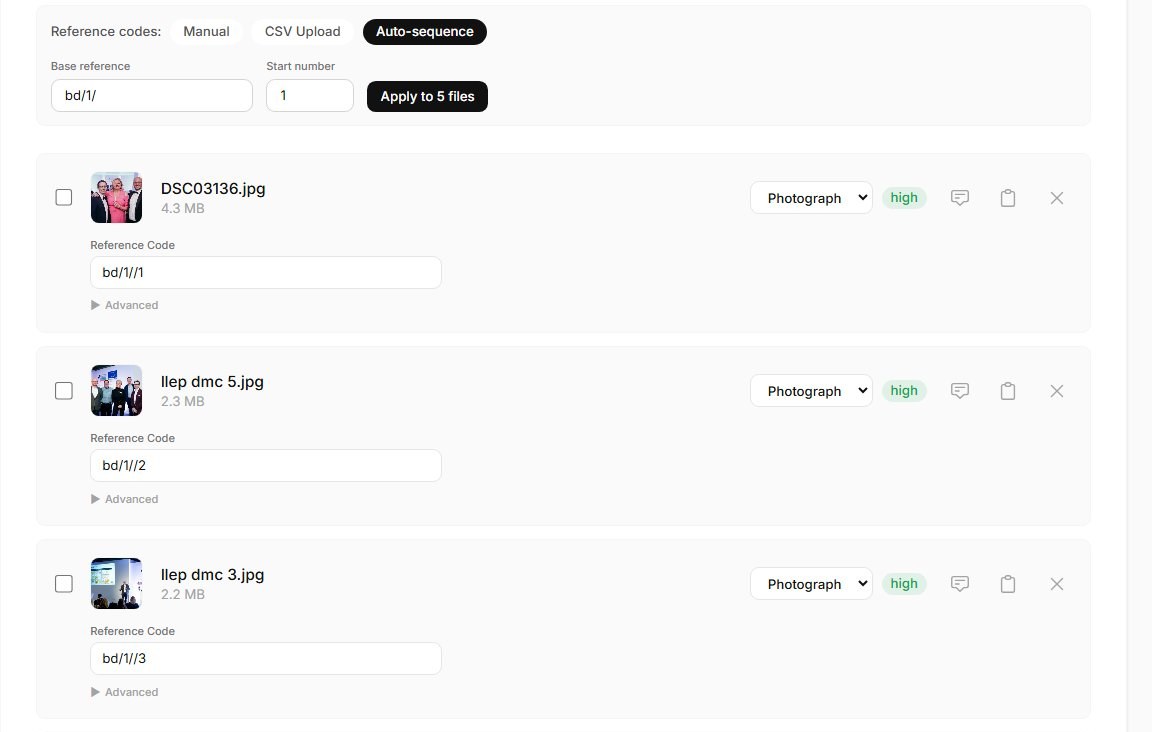
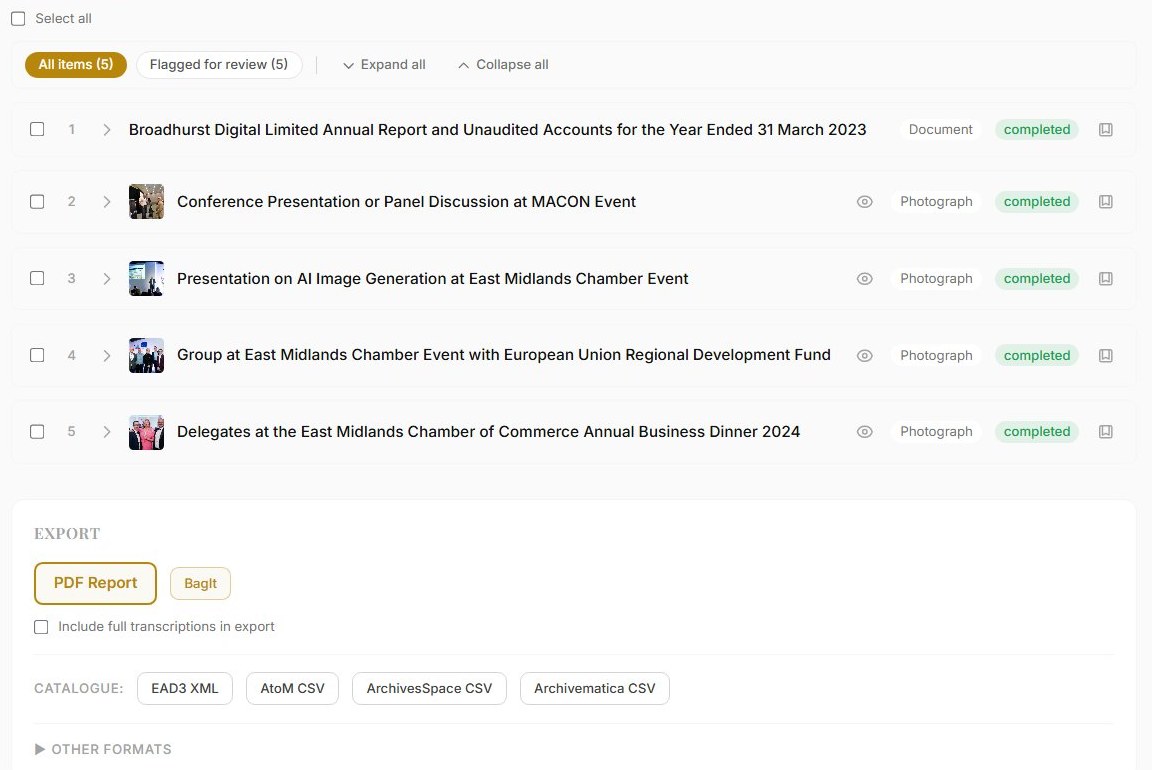
  • Standards-native export. EAD3, Dublin Core, AtoM and ArchivesSpace CSV, BagIt with PREMIS, and PDF finding aids — we strengthen the systems you already use.

AI that shows its working

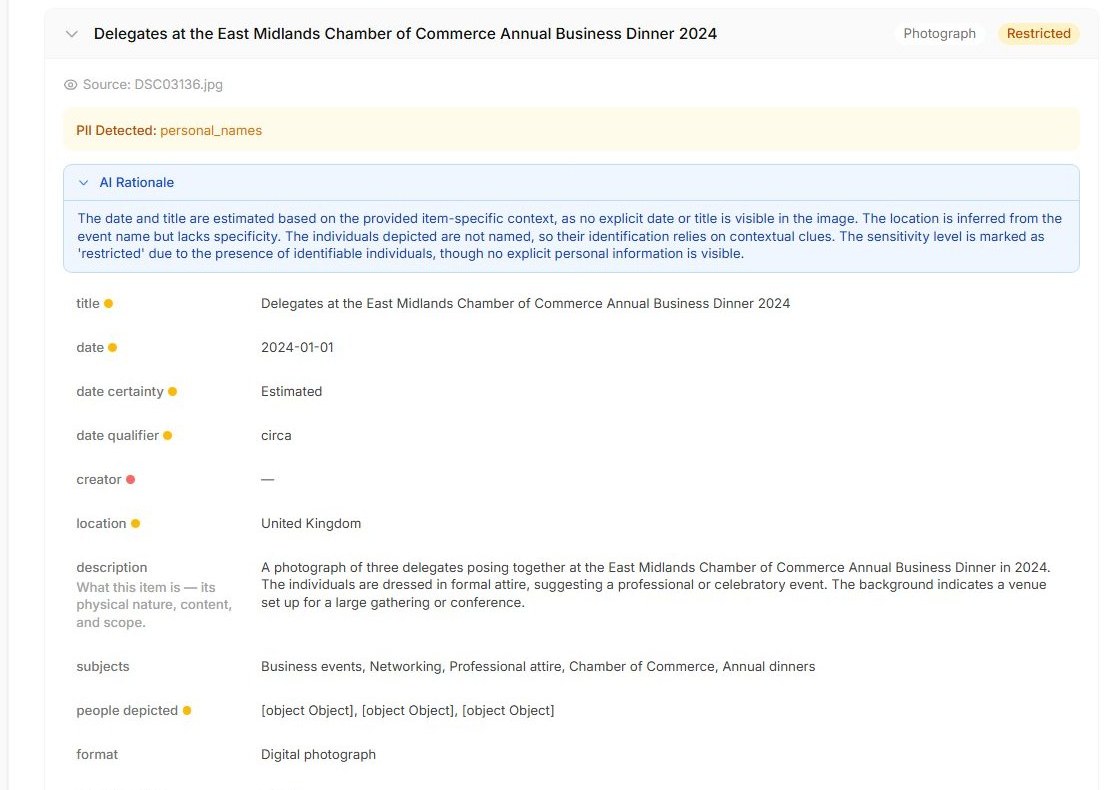
Every item processed by Archivers.ai produces structured metadata across 18+ fields — title, date, creator, description, subjects, format, language, rights, and more. Each field carries a confidence score and an AI rationale explaining why that suggestion was made, so you can review with confidence.

Nothing is published without your sign-off. The AI does the first draft; you make the archival judgements — and the audit trail records both.

AI-generated metadata detail showing title, date, description, subjects, PII detection and AI rationale for an archival item

The standards you work to

Archivers.ai generates metadata aligned to the standards professional archivists depend on.

EAD3 ✓ ISAD(G)-aligned ✓ BagIt ✓ Dublin Core ✓ CSV export ✓

Exports EAD3-compatible finding aids suitable for workflows that require standards-based archival XML, and BagIt packages with PREMIS provenance for downstream systems and services that use EAD-based imports.

Your research workspace, once the cataloguing is done

Explore lets you ask questions of your catalogued collection in plain language — trace a name across fonds, pull together material for an enquiry, or build the groundwork for an exhibition. Answers are grounded in your own reviewed records, with links back to the items themselves.

It’s the same discipline as the cataloguing side: the AI assembles, you judge. Explore is included on every paid plan.

Archivers.ai sits in front of your repository, CMS, or preservation system — it doesn’t replace it. Export profiles for AtoM, ArchivesSpace, Preservica, Archivematica, and more.

Guides for professional archivists

Updates from Archivers.ai