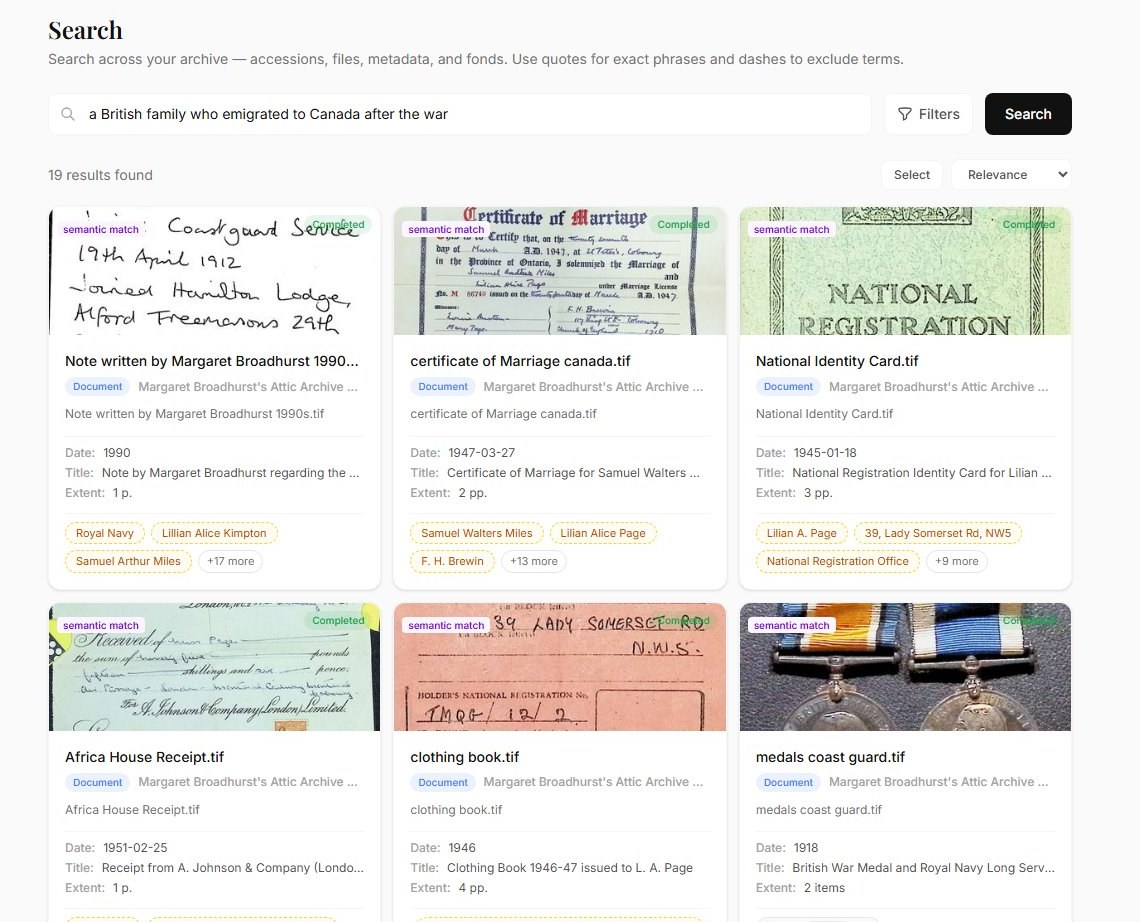
How Archivers.ai supports funded digitisation projects

Archivers.ai is designed to support NLHF-style digitisation workflows and similar grant programmes — helping teams produce standards-aligned outputs for funded digitisation projects, with scoping, mapping, processing, and public access all in one conversation. Formal acceptance by any specific programme still depends on the programme’s own requirements.

How Archivers.ai supports funded projects end-to-end

From bid scoping through delivery to post-project access. This is the shape of the work we do with funded digitisation projects.

Scoping & cost modelling

Realistic collection sizing, effort modelling, and cost breakdowns for bid budgets. Technical sections you can drop into an NLHF or research grant application.

Standards mapping

ISAD(G), EAD3, SPECTRUM, Dublin Core, PREMIS, BagIt. Map your source schemas to the formats funders and downstream systems expect.

Processing & review

AI-assisted draft metadata with archivist review at every step. Review policies agreed in advance, prepaid processing credits, progress dashboard for project sponsors.

Public access delivery

Staff Explore, public discovery portal, and the evidence of public engagement funders ask for when they look at post-project value.

Export & deposit

Final exports in EAD3, BagIt with PREMIS, Dublin Core, or CSV profiles, ready for deposit into your repository, CMS, or a partner preservation service.

Post-project reporting

Counts, timelines, engagement evidence, and standards compliance documentation that fits the shape of funder end-of-grant reports.

Why heritage digitisation bids fail

📋

Metadata standards are complex

ISAD(G), EAD3, and Dublin Core are difficult to implement manually — especially for under-resourced organisations without dedicated archival expertise. Getting them wrong weakens your bid.

💰

Digital costs are underestimated

Budgets often miss metadata enrichment, accessibility checking, long-term hosting, and preservation packaging. Reviewers notice these gaps — and they raise questions about deliverability.

⚖️

Compliance requirements are strict

CC-BY 4.0, CC0 for metadata, WCAG accessibility, and 5–20 year availability commitments are hard to guarantee without the right tools and export formats in place from the start.

Built for NLHF digital good practice

  • Meets ISAD(G) and EAD3 standards. AI generates hierarchical archival descriptions. Export to EAD3 XML with one click — no manual XML coding.
  • CC0-ready metadata exports. All metadata exports (Dublin Core, EAD3, CSV) are in open formats ready for Creative Commons 0 1.0 dedication as NLHF requires.
  • WCAG accessibility built in. OCR and transcription make all text machine-readable and screen-reader compatible. Audio and video transcription provides searchable transcripts.
  • 5 to 20 year preservation packages. BagIt export with PREMIS preservation metadata creates standards-ready packages for trusted digital repositories.
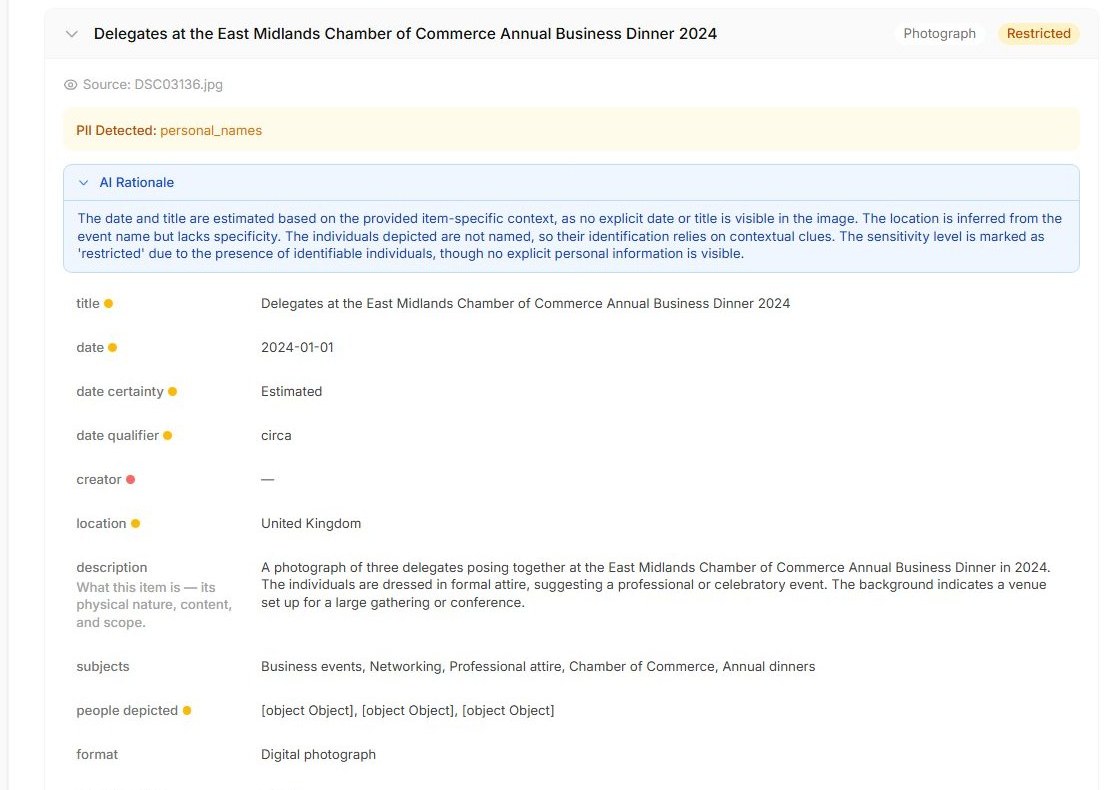
  • Human-in-the-loop review. Every AI suggestion includes confidence scores and reasoning. Archivists review and approve before export — no black box.
  • PII and sensitivity detection. Flags personal data and sensitive content before you apply open licensing — protecting your GDPR compliance.

How Archivers.ai maps to NLHF requirements

NLHF Requirement What's Required How Archivers.ai Delivers
Availability 5–20 years unfettered public access BagIt + PREMIS export for repository deposit; EAD3 for aggregate portals
Accessibility W3C Single A / Double A OCR, HTR, and transcription make content machine-readable and screen-reader compatible
Openness CC-BY 4.0 for content, CC0 for metadata Open-format exports; sensitivity flagging for exceptions; rights fields in every record
Metadata Standards ISAD(G), EAD3, Dublin Core Native ISAD(G) hierarchy; one-click EAD3 XML; Dublin Core export
Human Oversight AI accuracy verification required Per-field confidence scores, AI reasoning, mandatory review stage
GDPR Compliance Personal data protection PII detection, sensitivity levels (public/restricted/closed)

One-click export to professional formats

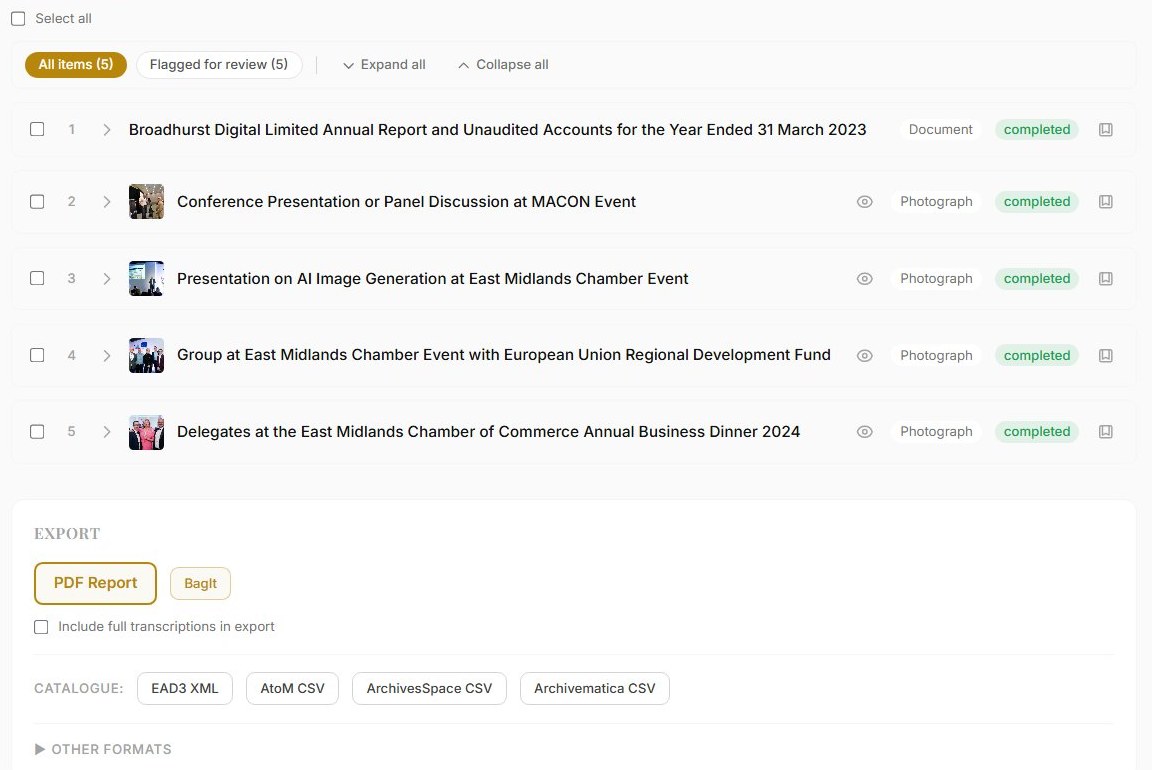
Export your catalogued collection to EAD3 XML, AtoM CSV, ArchivesSpace CSV, Archivematica CSV, BagIt with PREMIS, and Dublin Core — all from a single workflow. No manual format conversion, no data re-entry, no XML coding.

Archivers.ai export formats dropdown showing EAD3 XML, AtoM CSV, ArchivesSpace CSV, Archivematica CSV, BagIt, and Dublin Core options

Aligned with Heritage 2033

🏛️

Saving Heritage

AI cataloguing reduces backlog, making hidden collections discoverable. Items that would take years to describe manually can be catalogued in weeks.

🌱

Protecting the Environment

Digital access reduces physical handling of fragile originals. Batch processing mode minimises energy consumption for large-scale cataloguing projects.

🌐

Inclusion, Access, Participation

Research & Explore AI chat lets diverse audiences query collections in natural language. OCR and transcription make content accessible to screen readers.

📈

Organisational Sustainability

Builds digital skills within your team. Reduces consultancy dependency with intuitive, self-service tools that staff and volunteers can learn quickly.

Resources for your funding bid

Discuss your digitisation project

Tell us about your collection and your funding plans. We'll help you understand how Archivers.ai fits into your NLHF bid — and what to include in your budget.

Updates from The Archiver