Retroconversion

Your finding aid already exists. Make it findable.

Managed retroconversion turns a paper or card catalogue into structured, standards-based digital records — without touching the material itself.

Bring a sample of your index or finding aid · We map it with you

The retroconversion path

Works from what you already have.

Card index, typed list, handwritten register — the description already exists. Retroconversion is the work of getting it into a searchable digital catalogue.
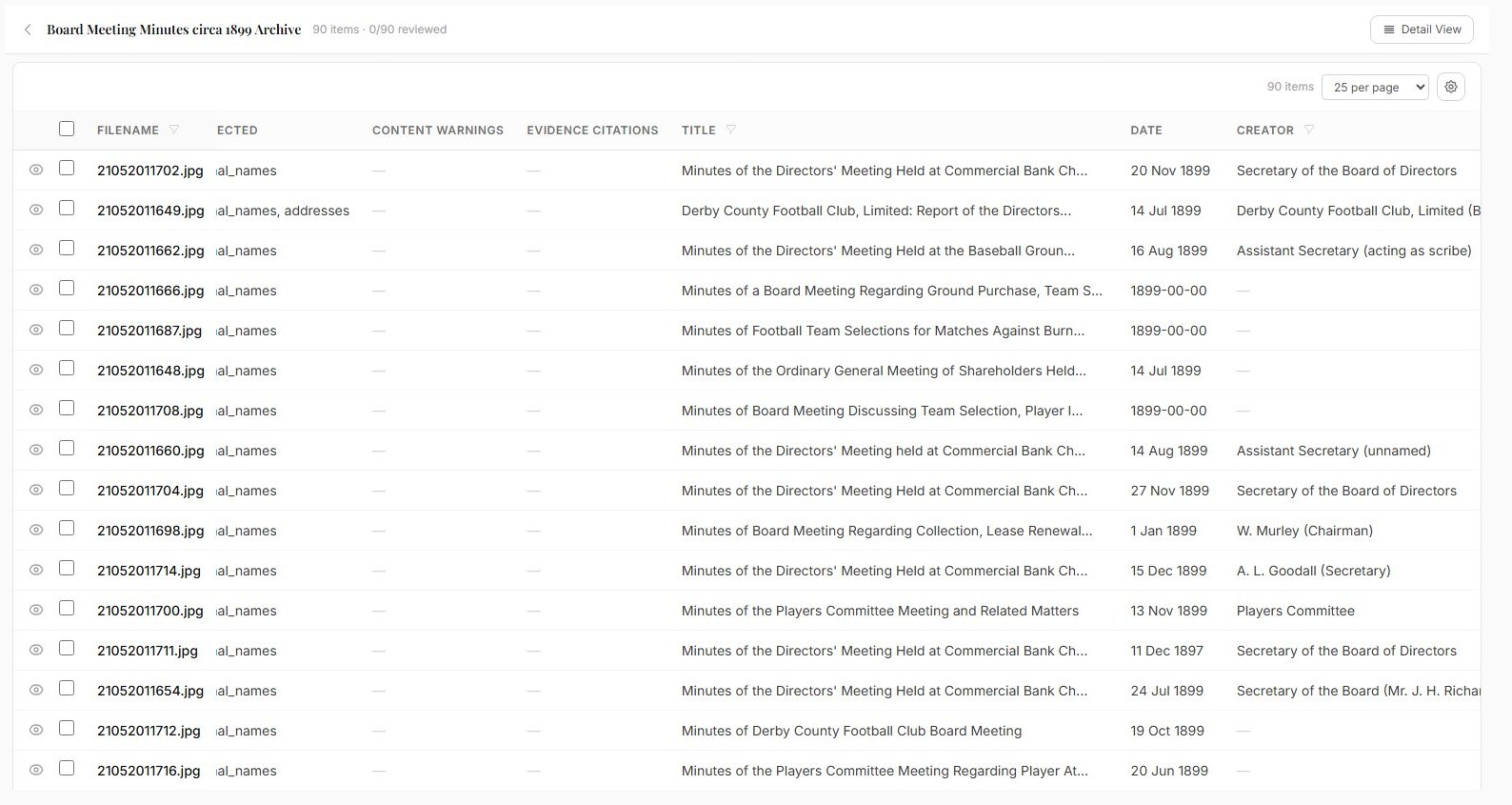
An Archivers.ai accession of 90 scanned board meeting minutes, headed 90 items and 0 of 90 reviewed, in a sortable table with columns for personal data detected, content warnings, evidence citations, title, date and creator
Keying, accelerated

Cards and lists, read at volume.

AI-assisted extraction reads your existing index or register and drafts structured fields for review — not blank forms to fill by hand.

  • Card indexes, typed lists, handwritten registers
  • Review queue sized to the collection
  • Credit cost shown before the run
What retroconversion involves
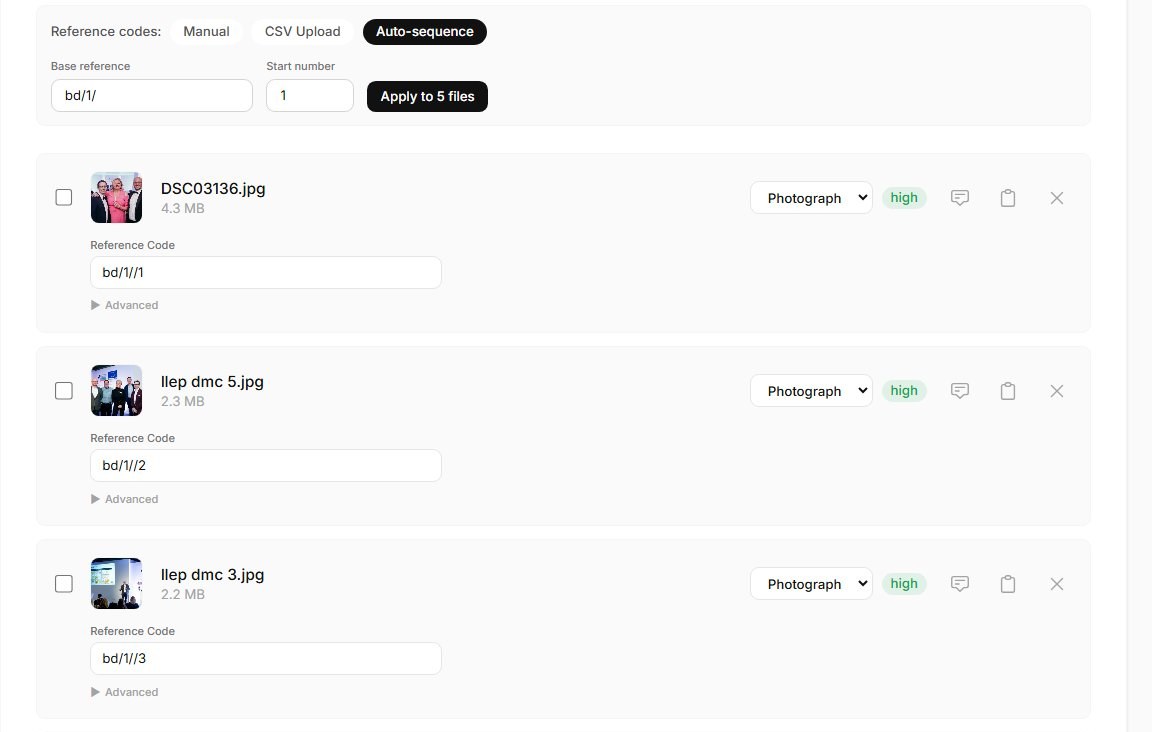
The Archivers.ai reference code panel with Manual, CSV upload and Auto-sequence options, a base reference applied across a batch of files, and each file showing its own editable reference code
Reference numbers

Kept exactly as written.

Your existing reference scheme is treated as authoritative, not regenerated. Local conventions and idiosyncrasies survive the conversion.

  • Never renumbered behind your back
  • Local conventions preserved, not normalised away
  • Carried through every outbound export
Written for your archivists
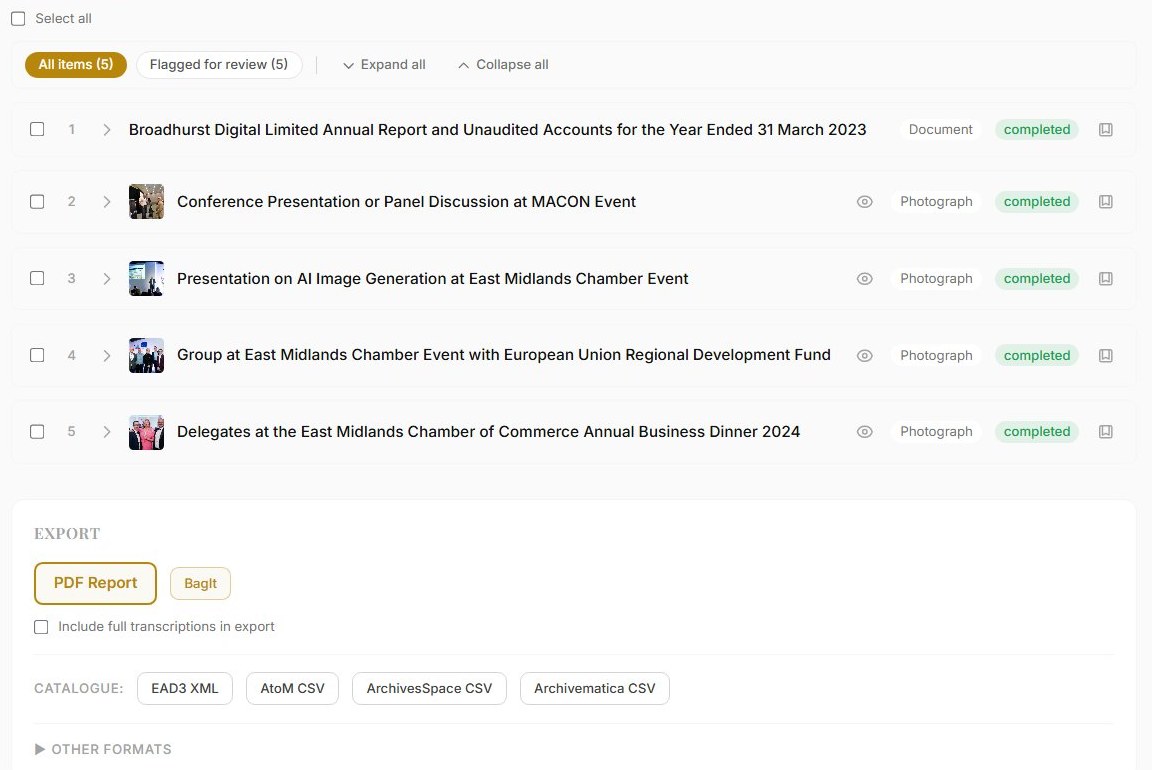
A completed Archivers.ai accession listing reviewed items above an export panel offering a PDF report, BagIt, and catalogue exports for EAD3 XML, AtoM CSV, ArchivesSpace CSV and Archivematica CSV
A real hierarchy, not a flat list

Structured, then exportable.

Converted records map to an ISAD(G)-aligned fonds/series/file/item hierarchy, ready for whatever system you run next — or none at all yet.

  • ISAD(G)-aligned levels of description
  • EAD3, Dublin Core, BagIt with PREMIS
  • AtoM, ArchivesSpace and Archivematica CSV out
All export formats
What stands behind it

Four things we state plainly.

No physical handling of the original material required

Reference numbers preserved exactly

Human review before anything exports

ISAD(G)-aligned output, not a flat list

Common questions

What collections teams ask first.

Is this the same as digitisation?

No. Digitisation scans or photographs the source material itself. Retroconversion converts the catalogue that describes it. You can retroconvert a card index for a collection that has never been scanned. See retroconversion vs digitisation for the full distinction.

Does the material need to be scanned first?

No. Retroconversion works from your existing catalogue — cards, lists or registers — whether or not the collection itself has been digitised.

What formats can you start from?

Card indexes, typed finding aids, handwritten accession registers, and spreadsheets with inconsistent or partial structure. We assess what you have during onboarding and agree a mapping before conversion starts.

How do you handle handwriting or inconsistent local conventions?

AI-assisted extraction drafts a structured record from each card or entry, with its evidence cited and any unsupported field flagged. A reviewer checks every drafted record against the original before it is accepted.

What do we get at the end?

An ISAD(G)-aligned catalogue — fonds, series, file, item — exportable to EAD3, Dublin Core, BagIt with PREMIS, or AtoM, ArchivesSpace and Archivematica CSV. It can sit alongside a system you already run, or be the platform you move to.

Start with one drawer or one shelf.

Bring a sample of your card index or finding aid. We map it, convert it, and your team checks every reference number survived.